Three jobs that can share one component
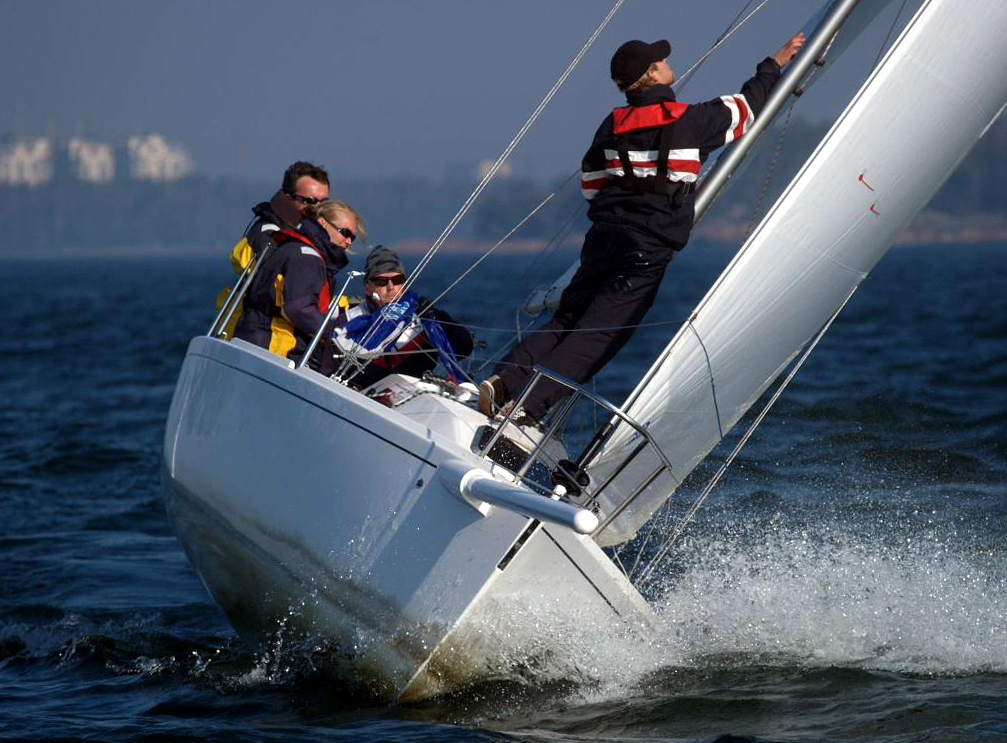
Underwater appendages may resist leeway, contribute to stability, steer the boat or support it vertically. One component can perform several jobs, but the jobs are not identical. A ballasted keel uses weight and its lever arm as part of the boat’s righting system; a light dinghy board mainly changes hydrodynamic resistance to sideways motion. Calling both a “fin” hides an important difference.
The hull, centre of gravity, buoyancy and crew position all contribute to stability. Ballast mass alone cannot describe the complete righting behaviour. Nor does a large-looking board guarantee more stability when its principal purpose is generating lateral force.
Why a keel needs water flow
As the boat moves, a keel or board meets the water at an angle associated with leeway. Its foil shape can generate a sideways lift force that helps balance the sails’ lateral force. The boat still makes some leeway; the appendage does not lock it onto a rail. Slowing down changes the force available for the same angle and can increase sideways loss.
Lift and drag both matter. Section shape, span, surface condition and the surrounding hull influence performance. A deeper keel may offer useful hydrodynamic or ballast leverage, but draft, structural loads and the intended sailing area constrain the design.
Centreboard, daggerboard and lifting keel
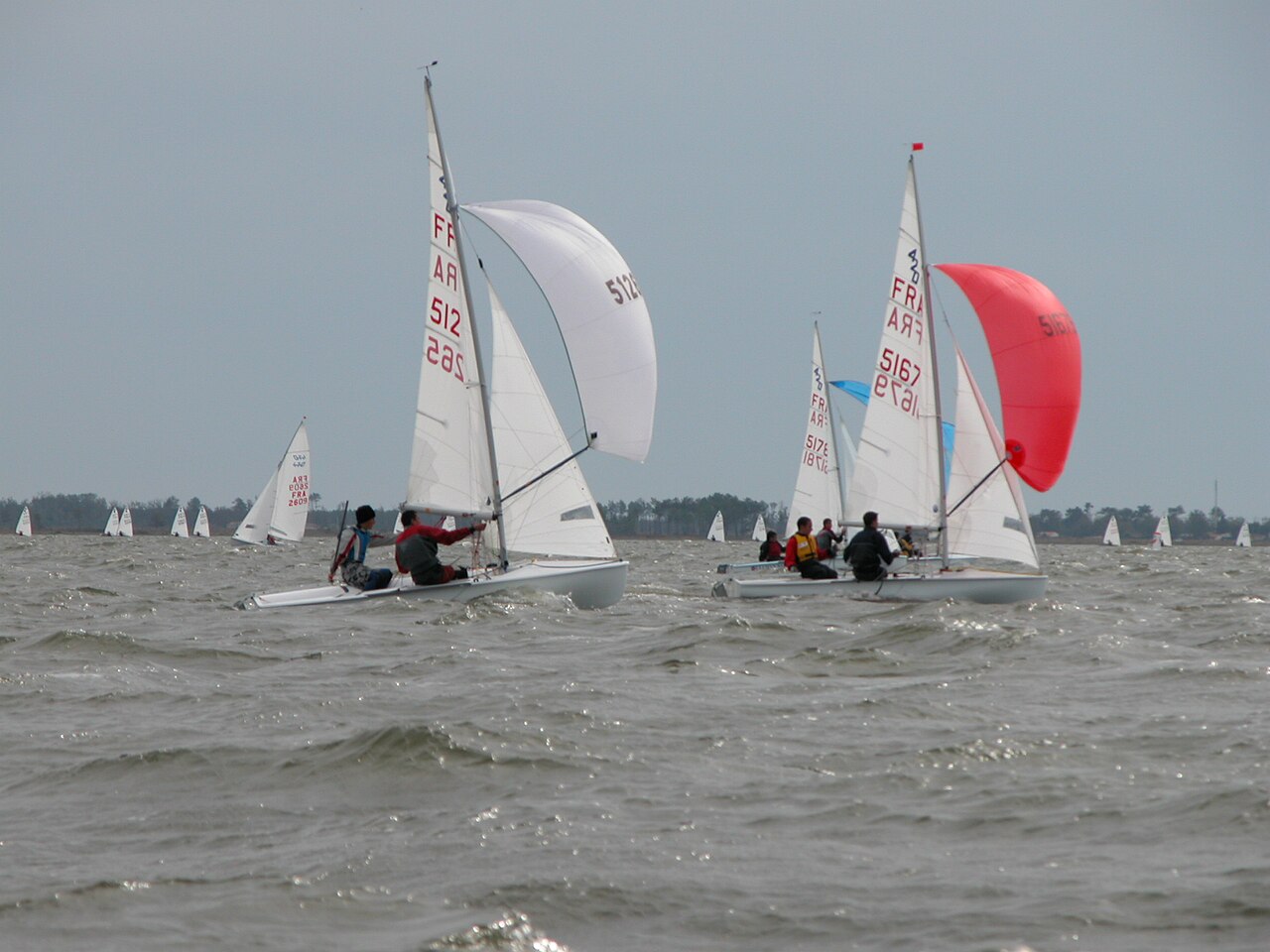
A centreboard pivots into its case. A daggerboard retracts without that pivoting action. A lifting keel can also retract, yet may carry substantial ballast and requires a structure and lifting system designed for those loads. Everyday terminology varies between builders and languages; the actual drawing and equipment description settle what is fitted.
Raising an appendage can reduce draft, but can also change lateral resistance, balance and, with a ballasted lifting keel, stability. Transport, shallow-water and sailing positions should therefore be treated as distinct configurations rather than interchangeable settings.
Vertical lift and flight control
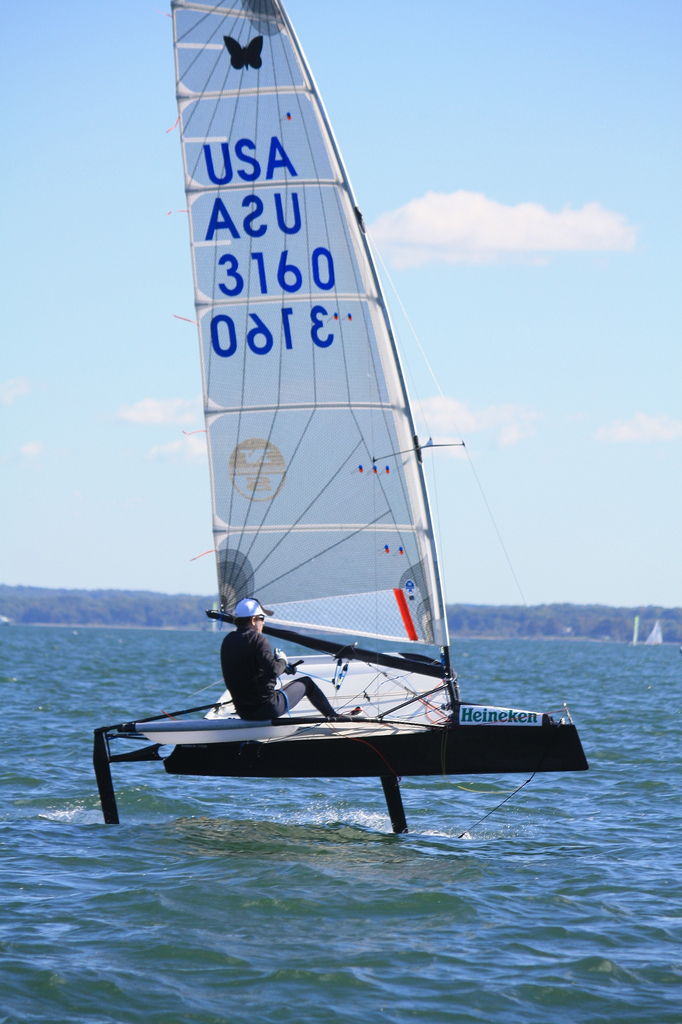
A hydrofoil can be arranged to generate vertical support as well as lateral force. Once enough load is supported dynamically, less hull remains immersed. Some systems aim for full flight; others partly unload the hull or add a righting effect. Foiling dinghies and offshore foilers should not be assumed to use identical geometry or control.
Ride height, pitch and foil immersion interact. Near the free surface, ventilation and changing immersion can alter lift. These dynamics explain why installing a larger foil is not a simple, independent speed upgrade.
Read a system rather than a silhouette
For comparison, record appendage type, draft in each position, ballast arrangement, control method and relevant class rules. Also distinguish a maximum permitted dimension from a particular boat’s measured equipment. World Sailing provides formal definitions; manufacturer and class documents explain how a complete design uses them.
Sources & further reading
Technical details are based on the sources below. Our explanations are original editorial analysis, not a hands-on sea trial.
- World Sailing — Equipment Rules, hull appendage definitions sailing.org
- UK Sailmakers — Keel forces and keel forms uksailmakers.com
- UK Sailmakers — Centreboard and daggerboard mechanisms uksailmakers.com
- IMOCA — Official appendage and keel overview imoca.org
- WASZP — Foiling system tutorials waszp.com
Photography
Sources checked: . Specifications may vary by year, rig and configuration; follow the definitions used by each source.