
Rig, sail plan and inventory
The rig is the system of spars, supporting rigging and associated fittings. A sail plan describes how the sails are arranged and also means the drawing that records their outlines and dimensions. The sail inventory is the collection of actual sails available for different conditions. These three ideas are related but not interchangeable.
Hull descriptions answer another question. A catamaran may carry a sloop rig; a monohull may be a schooner. Cruising and racing describe use, while “classic” may describe history or style. Combining these terms is more accurate than forcing every boat into a single exclusive family.
Sloop, cutter and cat rig
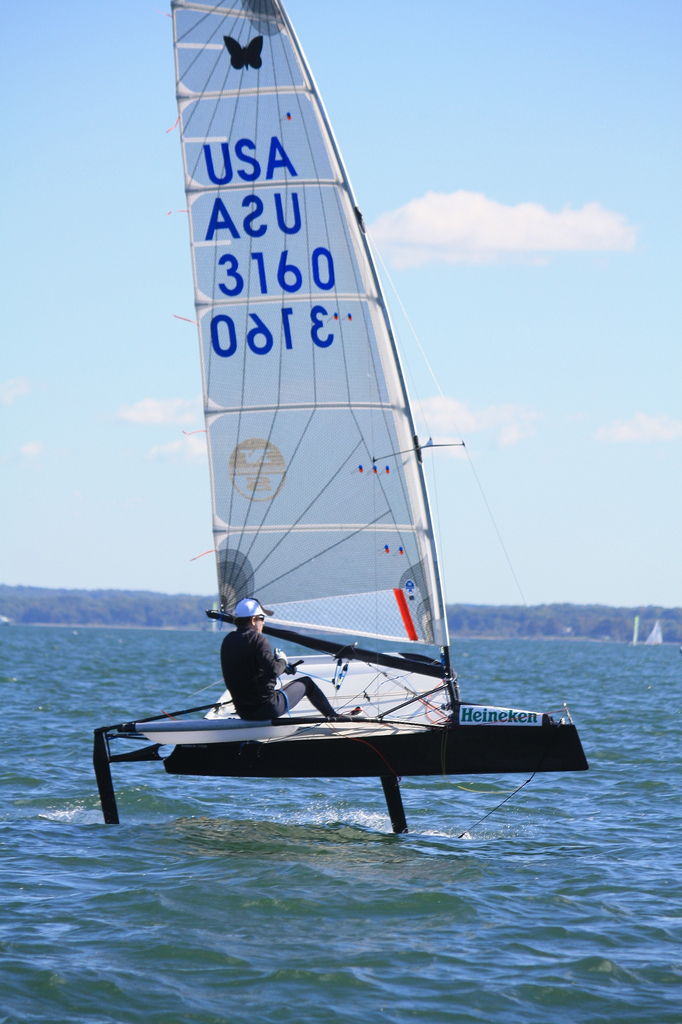
A sloop has one mast, a mainsail and one working headsail. A cutter has one mast with more than one working headsail, commonly an outer jib or yankee and an inner staysail. A cat or una rig carries a mainsail without a headsail. “Cat rig” says nothing about the number of hulls: it is not another word for catamaran.
A masthead sloop takes the forestay near the masthead; a fractional arrangement attaches it lower. That distinction changes the proportions and tuning possibilities, but does not by itself rank the boat’s quality. Carrying a spinnaker occasionally does not turn a sloop into a cutter.
Ketch, yawl and schooner
A ketch has two masts with a shorter mizzen aft, positioned forward of the rudder stock in the formal definition. A yawl also has a shorter mizzen, but its mast is aft of the rudder stock. In the familiar two-masted schooner, the forward mast is shorter than or equal to the aft mainmast. Everyday historical names can contain exceptions, so drawings are useful.
Dividing sail area can make individual sails smaller, while adding spars, rigging and interactions between sails. It does not guarantee easy handling. The complete layout, equipment and crew determine how that trade-off works.
Sail shape is a separate description
Bermudan usually refers to a triangular fore-and-aft mainsail. A gaff supports the upper edge of a four-sided sail. These are not competing hull categories: a sloop or schooner can use a gaff arrangement. Likewise, a bowsprit describes a spar projecting forward, rather than a complete rig type. Describe what is present before inferring a sailing characteristic from its outline.
From a drawing to an actual sail
The familiar I, J, P and E dimensions summarise parts of the foretriangle and mainsail envelope. They are useful reference labels, not a complete sail order. Roach, luff hardware, furling gear, track position and available hoist also matter. Use the designer’s plan, class documents and direct measurements for the installed rig. A model name or a photograph cannot establish the dimensions of a replacement sail.
Sources & further reading
Technical details are based on the sources below. Our explanations are original editorial analysis, not a hands-on sea trial.
- World Sailing — Equipment Rules, formal rig configurations sailing.org
- UK Sailmakers — Sloop, cutter and cat-rig terminology uksailmakers.com
- UK Sailmakers — Schooner definition uksailmakers.com
- UK Sailmakers — Rig dimensions and measurement uksailmakers.com
Photography
Sources checked: . Specifications may vary by year, rig and configuration; follow the definitions used by each source.