Symmetric and asymmetric describe shape
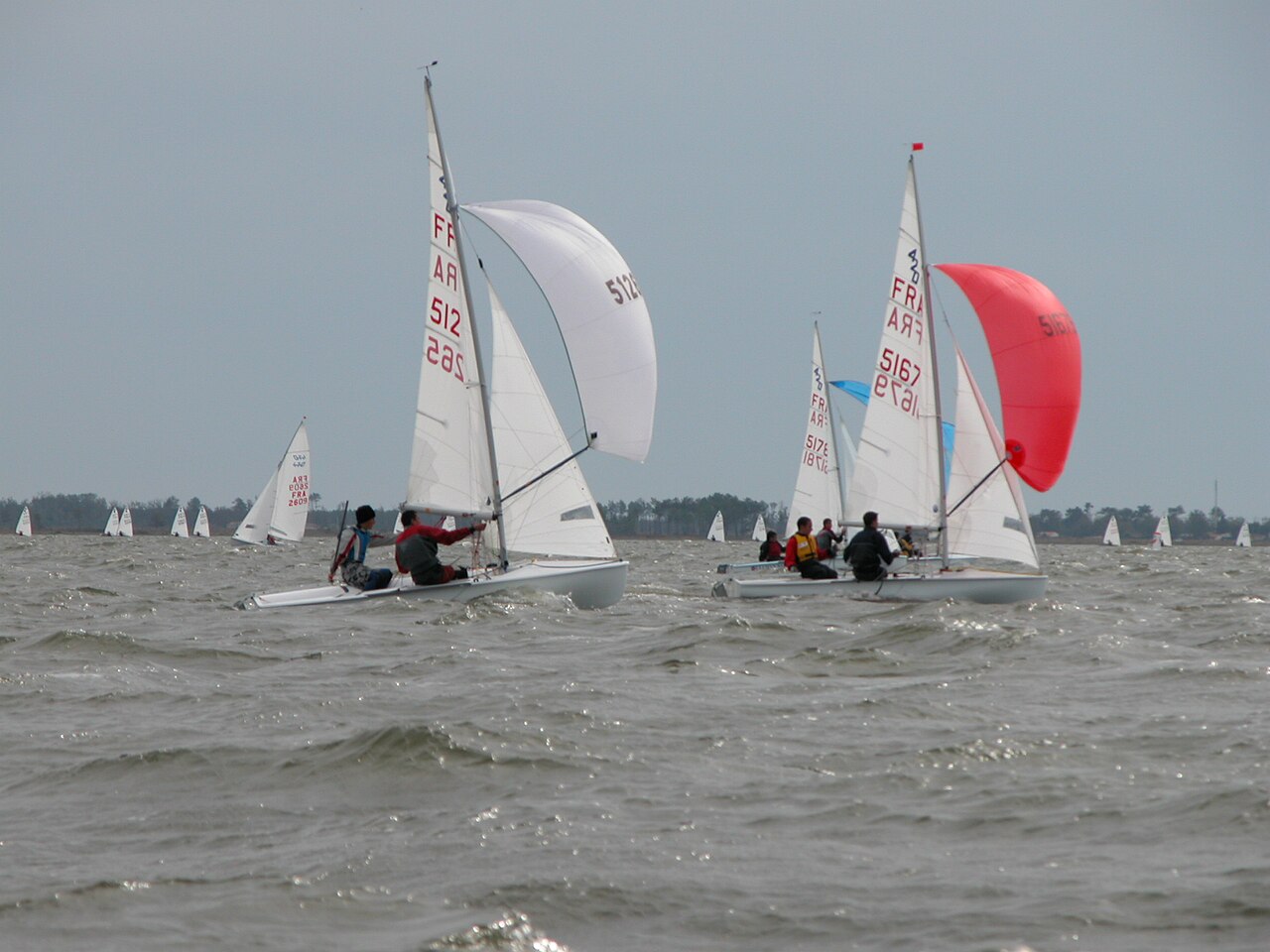
A symmetric spinnaker is designed with matching sides about its centreline. In a conventional arrangement the windward lower corner is supported by a spinnaker pole, with sheets and guys controlling the sail and pole. Rotating the pole can present the sail to the wind when sailing deep angles. The equipment and manoeuvres vary with boat size and class.
An asymmetric has distinct luff and leech shapes, and a defined tack and clew. Its tack is commonly held at the bow or on a bowsprit while the clew is trimmed by a sheet. The outline is only the beginning: depth, entry shape and cloth selection determine the intended wind range.
An asymmetric does not mean one fixed angle
Some asymmetrics are runners intended for deeper sailing; others are flatter reachers. Symmetric inventories also include sails for different angles and wind strengths. Sailmaker codes such as A2 or S4 communicate a role within a product system, but the actual design and maker’s wind-angle chart matter more than the label alone.
“Gennaker”, “cruising chute” and “Code Zero” are not perfectly interchangeable names. A cruising gennaker is usually an asymmetric downwind sail; a Code Zero is typically a flatter reaching sail with its own loading and furling requirements. Rating definitions and manufacturer terminology can differ.
Fast through the water or fast towards the mark?
A boat can sail a longer, hotter course and still make faster progress downwind if the speed gain is large enough. Velocity made good measures the useful component towards a chosen axis or destination. It must be defined: wind VMG and waypoint VMG are not automatically the same quantity.
Consider a simple no-current example. At 8 knots, sailing 30 degrees away from the straight downwind direction gives about 6.9 knots of downwind progress. At 6 knots directly downwind, progress is 6 knots. That comparison ignores gybes, waves and shifts, but shows why heading straight at the destination is not always the quickest choice.
Apparent wind shapes the downwind course
As a fast boat accelerates, apparent wind can move well forward even though the course remains downwind relative to the true wind. This is particularly important on light multihulls and foiling boats. The best angle therefore depends on the boat’s speed response and sail inventory. A broad claim that all spinnakers should be sailed at one compass-relative angle misses the controlling airflow.
The handling system is part of the sail choice
Compare tack fittings, halyards, sheets, pole or sprit loads, retrieval arrangements and available crew. Socks and furlers can organise deployment and recovery, but the sail and furling system must be compatible. This is an explanation of options, not a hoist or gybe procedure: the correct sequence belongs to the equipment documentation and instruction for the actual boat.
Sources & further reading
Technical details are based on the sources below. Our explanations are original editorial analysis, not a hands-on sea trial.
- North Sails — Symmetric and asymmetric spinnakers northsails.com
- North Sails — Downwind sail families and gennakers northsails.com
- North Sails — Code sail definitions and rating terminology northsails.com
- UK Sailmakers — Downwind progress and VMG uksailmakers.com
- Garmin — Wind VMG and waypoint VMG data www8.garmin.com
- Seldén — Furling and sail-handling systems seldenmast.com
Photography
Sources checked: . Specifications may vary by year, rig and configuration; follow the definitions used by each source.