These categories overlap: hull count, rig, purpose and construction describe different aspects of a boat. One yacht can belong to several groups.
The accommodation changes the boat
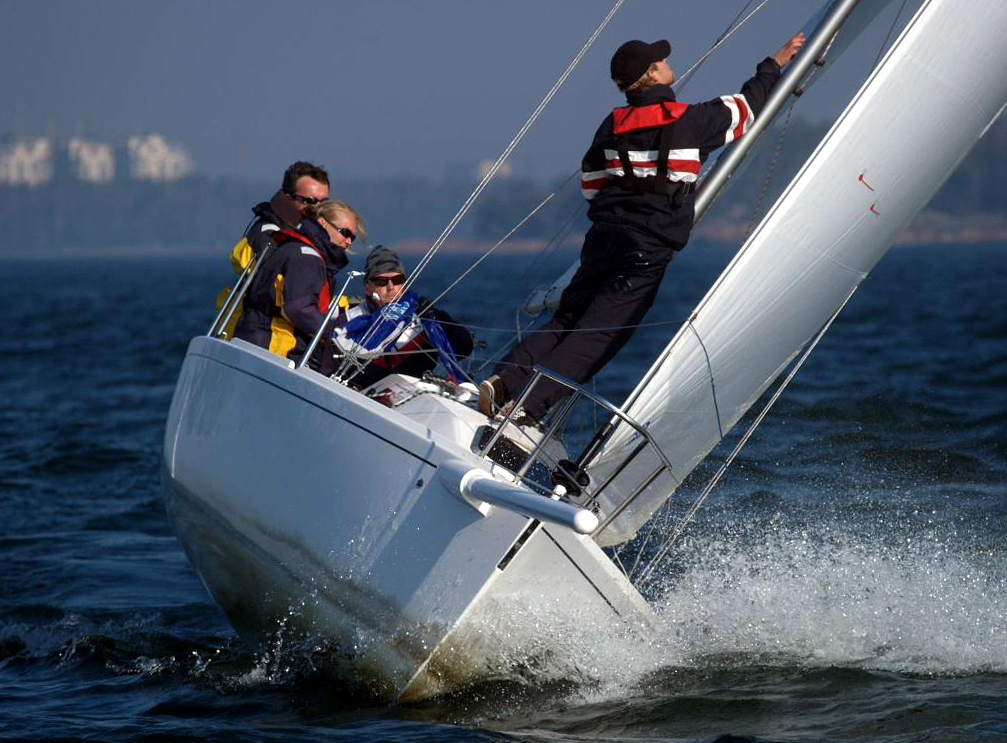
A cruising yacht combines sailing with accommodation: berths, a galley, a toilet and storage are part of its purpose. Fresh water, fuel, batteries, ground tackle and personal equipment add weight beyond a bare specification. The design must therefore balance sailing performance with volume, systems access and the loads of everyday use.
Cruising is an intended use, not a hull shape. A cruising yacht may be a monohull, catamaran or trimaran, and some designs also race. This page concentrates on the familiar ballasted monohull cruiser; the multihull pages explore different ways of meeting the same living requirements.
Hull, keel and handling choices
Beam and topside shape influence interior volume, while keel choices change draft and ballast arrangement. Two boats with the same advertised length may consequently have quite different cabins, underwater shapes and handling. Twin wheels, self-tacking jibs and lines led aft are layout decisions; their value depends on the actual crew and how the boat is used.
BENETEAU’s Oceanis 37.1 provides a documented modern example, with alternative cabin layouts and different published minimum and maximum drafts. A model name containing a number is not a measurement definition: the manufacturer lists its overall length separately.
Read the cruising load, not only the brochure
Compare displacement on the same basis, then ask what is included. Tank capacity is not usable payload, and berth count does not establish offshore suitability. Study sail-reduction systems, ventilation, handholds, maintenance access and stowage as carefully as cabin photographs. Manufacturer data describes a configuration; condition, modifications and loading determine the boat actually afloat. These are source-based design observations, not a sea trial or an endorsement of a particular passage.
Explore real examples
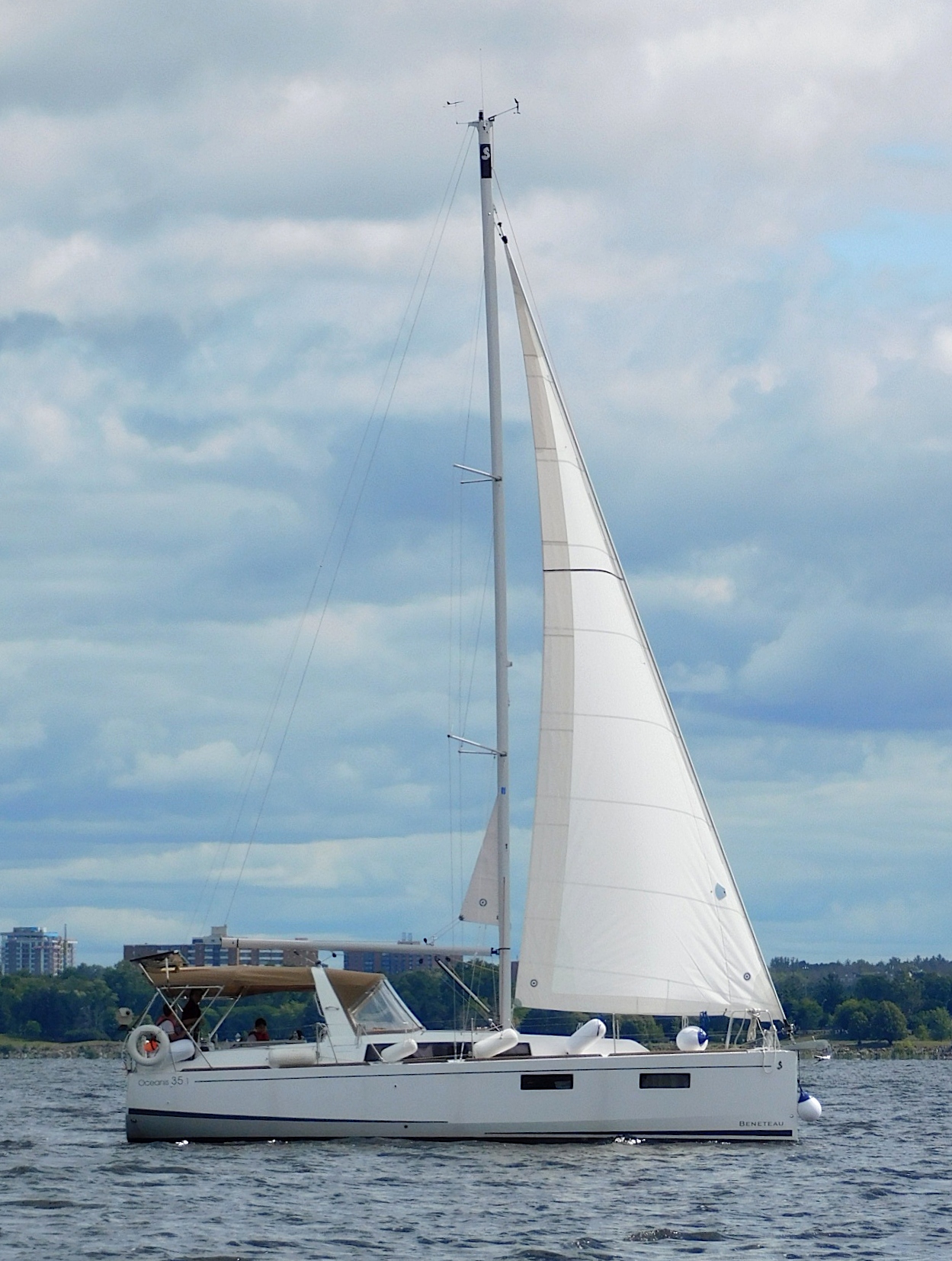
- Beneteau Oceanis 35.1 — A cruising monohull with twin rudders, alternative keel configurations and layouts that trade cabin count against storage and living space.
- Bavaria C42 — Bavaria’s broad 42-foot cruising yacht combines a chined hull, V-shaped bow and self-tacking headsail with two- or three-cabin accommodation.
- Jeanneau Sun Odyssey 349 — A compact Marc Lombard cruising design with twin wheels, alternative keel configurations and two- or three-cabin layouts.
- Hanse 508 — A large Judel/Vrolijk cruising yacht with a self-tacking jib, twin helm stations and a wide range of interior layouts.
- Dufour 520 Grand Large — A Felci-designed cruising monohull that connects a large cockpit, adaptable stern platform and several interior arrangements in one 52-foot family.
Sources & further reading
Technical details are based on the sources below. Our explanations are original editorial analysis, not a hands-on sea trial.
- BENETEAU — Oceanis 37.1 manufacturer specifications beneteau.com
- World Sailing — Equipment Rules of Sailing 2025–2028 sailing.org
- Seldén — Masts and furling arrangements seldenmast.com
Photography
Sources checked: . Specifications may vary by year, rig and configuration; follow the definitions used by each source.