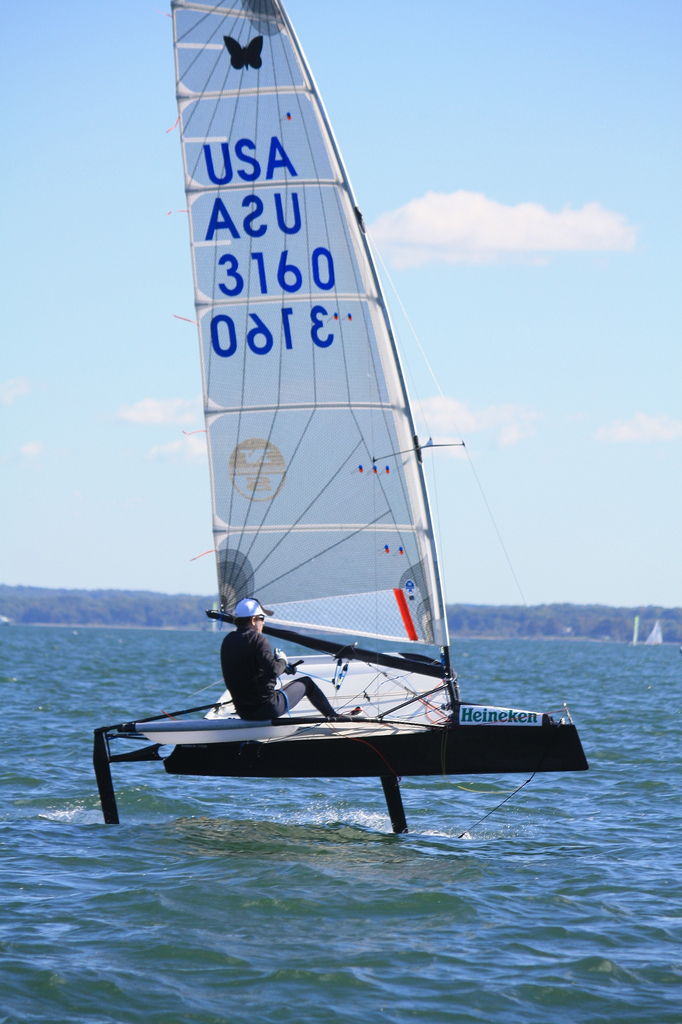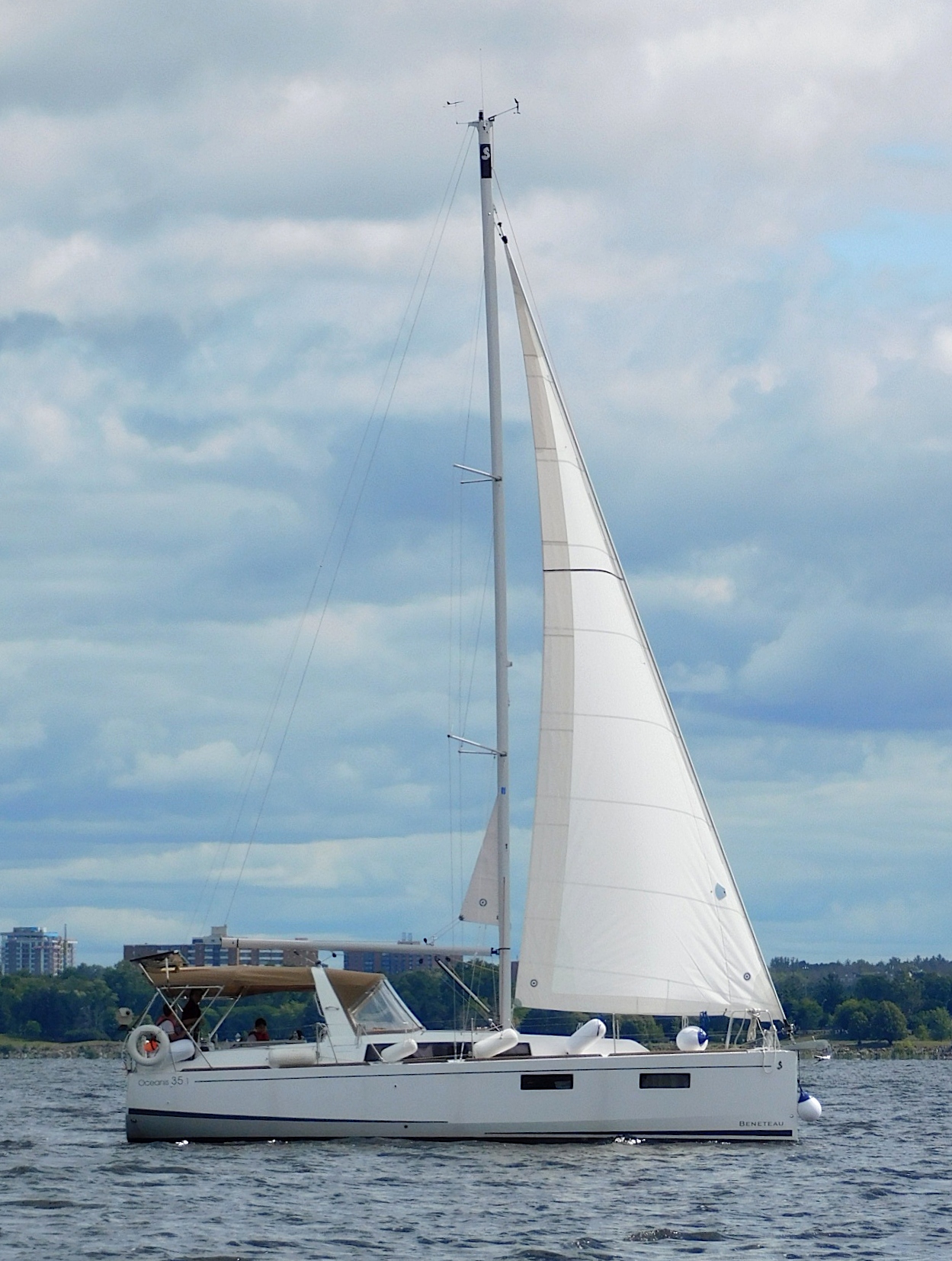

These categories overlap: hull count, rig, purpose and construction describe different aspects of a boat. One yacht can belong to several groups.
What makes a dinghy?
A sailing dinghy is usually a small, open boat with a retractable centreboard or daggerboard rather than a deep, heavily ballasted keel. The description covers a wide range: a simple single-sail trainer, a two-person boat with a jib, and a high-performance skiff can all be dinghies. Size alone does not tell you how demanding the boat will be.
These categories overlap. A foiling dinghy is still a dinghy; a training dinghy may also have a competitive racing class. Hull count, intended use and sail plan answer different questions and should be read together.
Balance is part of the design
On many dinghies the crew supplies much of the righting moment by moving weight to windward. Hiking straps or a trapeze increase that leverage, depending on the model. The board mainly resists sideways movement; it should not automatically be treated as ballast. Sail trim, steering and body position interact, so a small change is often immediately visible in heel and speed.
A daggerboard slides; a centreboard pivots. Both can reduce draft when retracted, but their cases, controls and grounding behaviour differ. Those details belong in a model comparison alongside hull weight and cockpit layout.
How to read a dinghy specification
Look beyond sail area. Crew range, rig options, launch arrangements and the local class fleet often matter more than a headline speed. The ILCA illustrates how one hull can use different rig sizes, while class rules control eligible equipment. Compare like with like: hull-only weight is not the same as a ready-to-sail boat, and a smaller rig can change the experience substantially.
A clear deck photograph is especially useful for following the sheet, board control and steering connections from the sailor’s actual position.
Explore real examples
- International 420 — A two-person dinghy that brings together trapeze balance, a three-sail inventory and precise teamwork in a compact hull.
- ILCA / Laser — One familiar hull, three recognised rig sizes: the ILCA makes sail control, balance and individual decision-making unusually visible.
Sources & further reading
Technical details are based on the sources below. Our explanations are original editorial analysis, not a hands-on sea trial.
- RYA — Dinghy, keelboat and multihull sailing pathway rya.org.uk
- ILCA — Class-legal equipment and boat dimensions ilcasailing.org
- UK Sailmakers — Centreboard and daggerboard uksailmakers.com
Photography
Sources checked: . Specifications may vary by year, rig and configuration; follow the definitions used by each source.