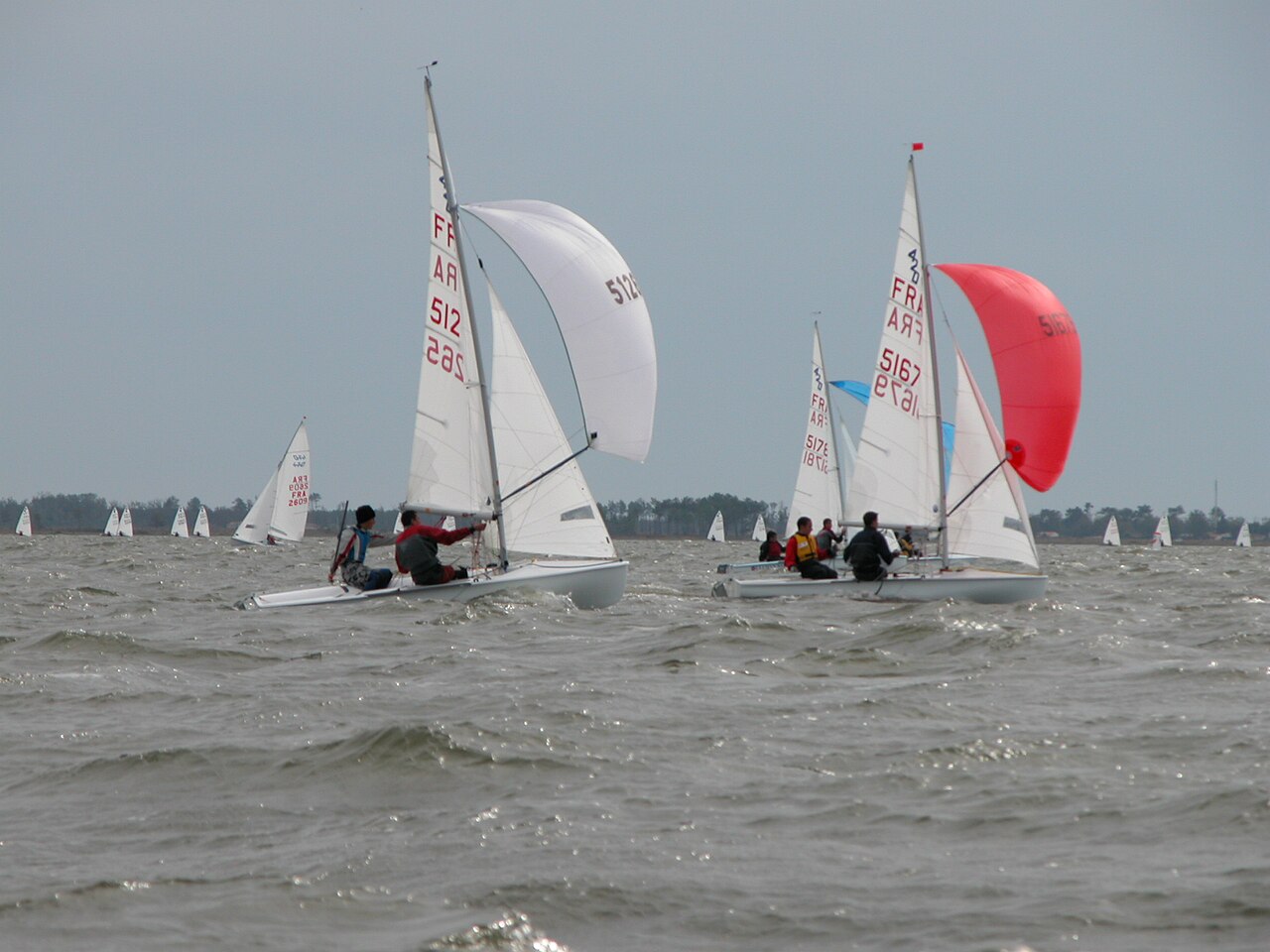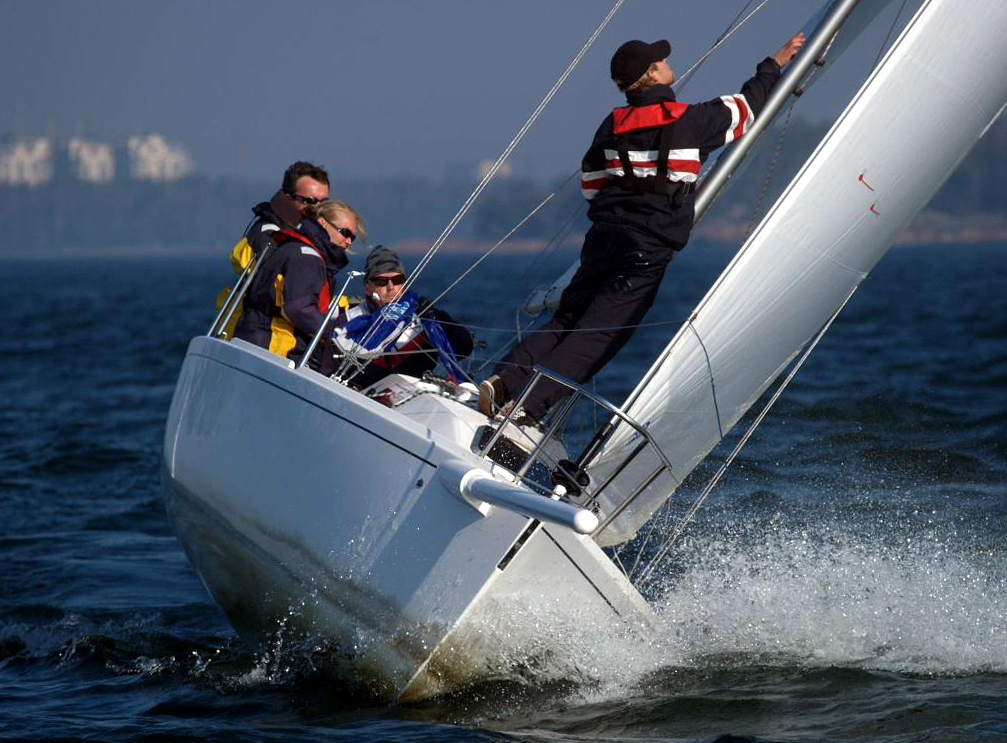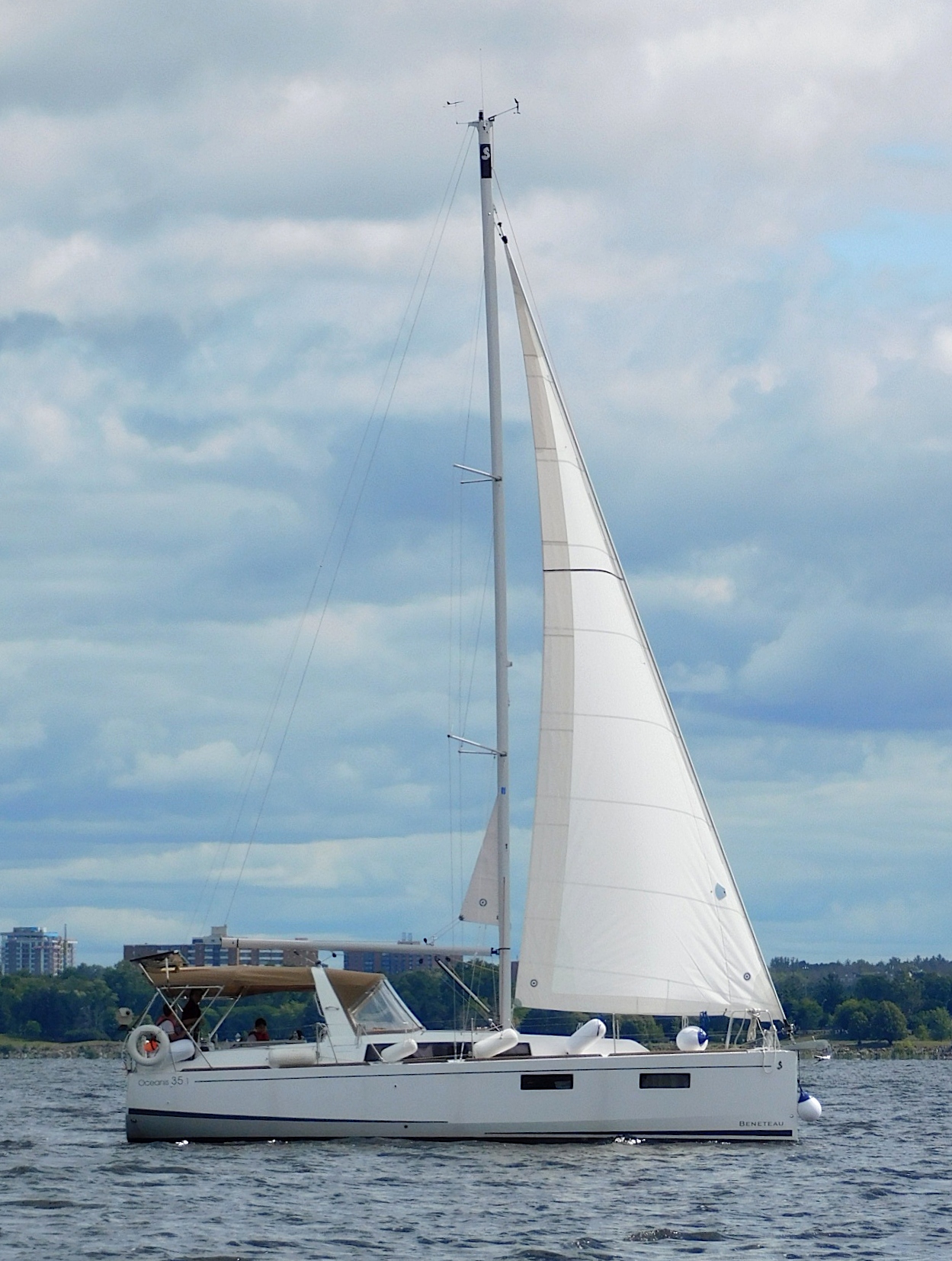
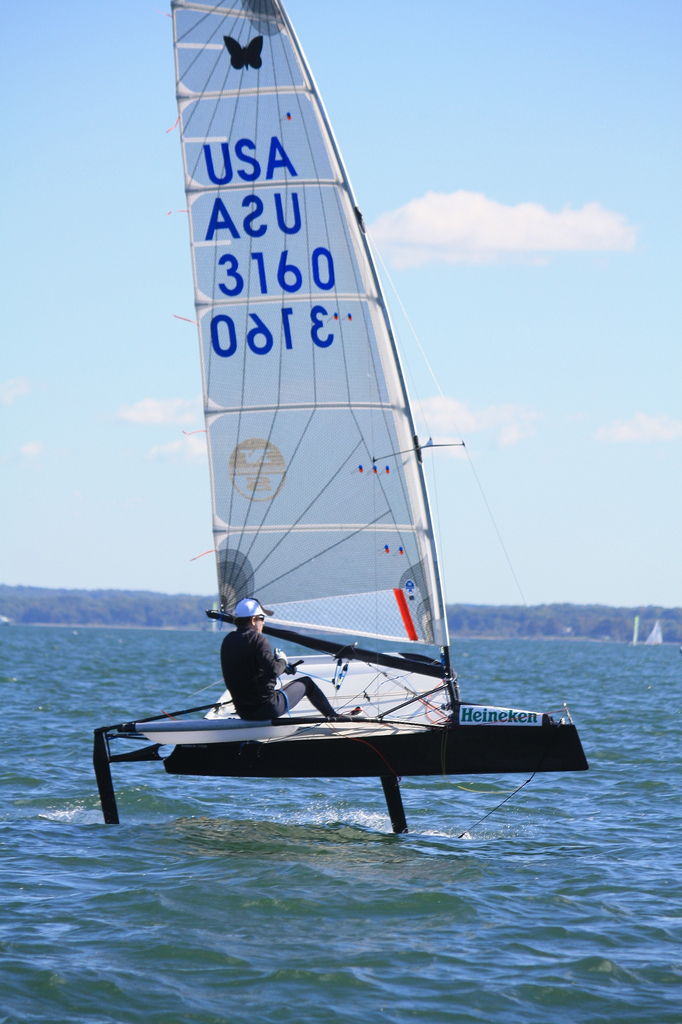
These categories overlap: hull count, rig, purpose and construction describe different aspects of a boat. One yacht can belong to several groups.
From buoyancy to foil lift
A foiling dinghy begins afloat like other small boats. As speed and the appropriate foil loading develop, its underwater wings can carry enough load to lift much of the hull clear of the water. Reducing hull contact changes resistance, but the foils still create drag. Flight therefore depends on a balance of speed, load and control rather than simply on having wings fitted.
“Foiling” describes a mode of operation, not a separate hull count or sail plan. Some boats are designed around it from the outset. Equipment, permitted adjustments and flight-control arrangements vary between classes.
Height, pitch and roll
The sailor must manage more than heading. Ride height affects how deeply the foils remain immersed; pitch changes the relationship between the main lifting foil and the rudder foil; roll links crew position to the direction of the supporting forces. A control system may help maintain height, but it does not remove the need to coordinate trim, steering and movement.
Transitions are particularly revealing. Accelerating into flight, touching down and manoeuvring can place the boat in very different hydrodynamic states within seconds. A smooth flight photograph shows only one part of that operating range.
What to compare
Compare rig sizes, foil handling ashore, adjustment complexity, replacement parts and the available coaching ecosystem. WASZP provides manufacturer tutorials covering setup and technique; these are useful for understanding one complete system. Avoid treating a claimed take-off wind speed as a universal threshold: sailor mass, water state and technique all change the result. A source-based overview cannot substitute for model-specific instruction.
The submerged foil depth also matters when identifying a suitable launch arrangement, even if the hull itself has little draft.
Explore real examples
- International Moth — An open development class where compact dimensions meet hydrofoil design, with both foiling and non-foiling boats in its history and fleet.
Sources & further reading
Technical details are based on the sources below. Our explanations are original editorial analysis, not a hands-on sea trial.
- WASZP — Manufacturer tutorials waszp.com
- WASZP — Frequently asked questions waszp.com
- RYA — Sailfoil instructor guide rya.org.uk
Photography
Sources checked: . Specifications may vary by year, rig and configuration; follow the definitions used by each source.