Technical specifications
| Hull length | 4.20 m |
|---|---|
| Beam | 1.63 m |
| Hull weight — World Sailing sheet | 80 kg |
| Mainsail / jib | 7.45 / 2.80 m² |
| Spinnaker | 9.00 m² |
| Crew | 2 |
What defines the 420?
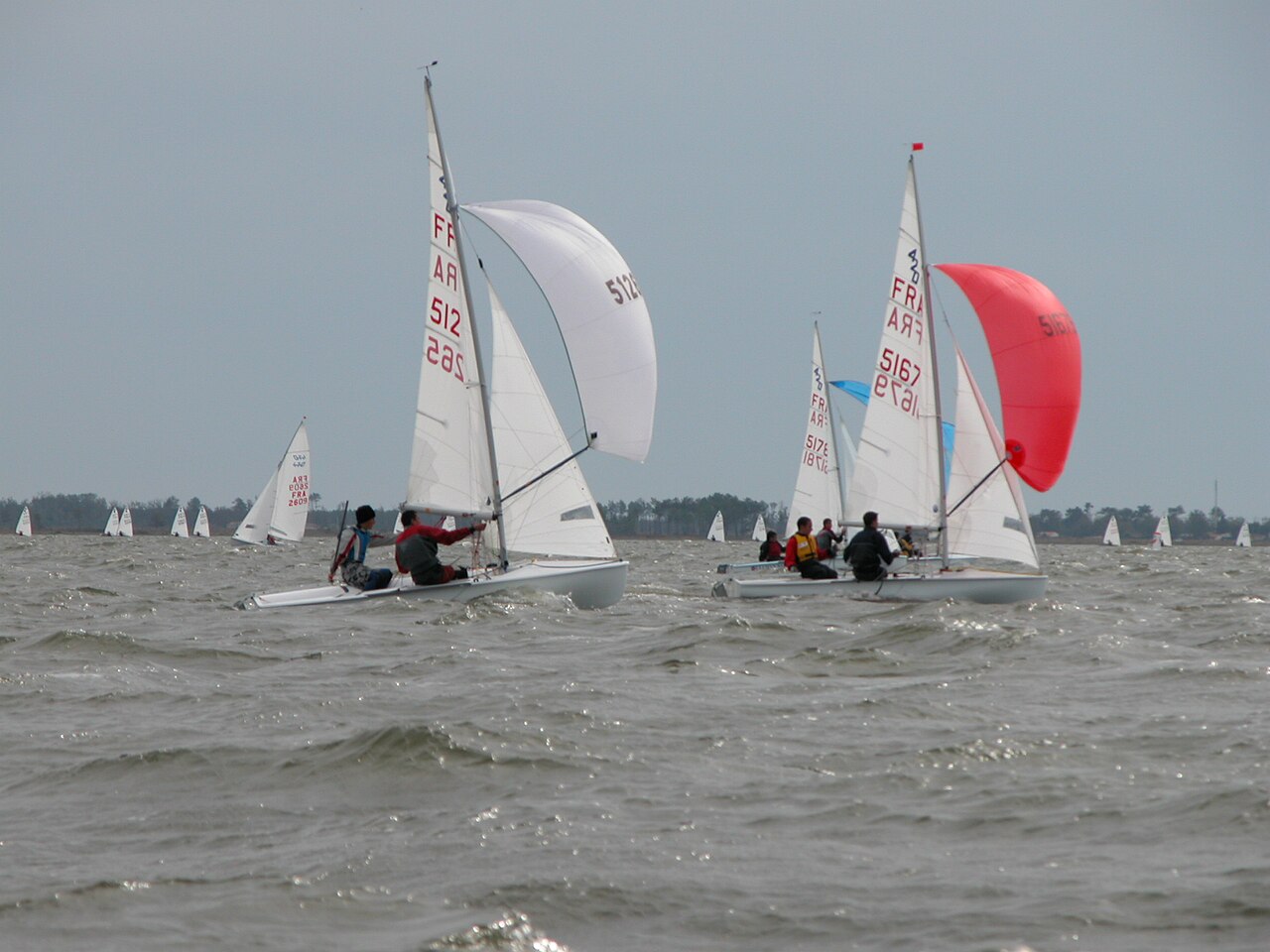
The International 420 is a centreboard dinghy for two sailors, with a mainsail, jib and symmetrical spinnaker. A crew trapeze extends the balancing lever beyond the gunwale. World Sailing’s technical sheet gives a hull length of 4.20 m and a beam of 1.63 m. These dimensions describe a boat whose controls and crew movements are closely connected: moving a body, easing a sheet or turning the rudder immediately changes the balance.
This profile concerns the International 420. The name should not be used as a substitute for the separate Club 420 or other school variants. Similar-looking hulls can have different rigs, construction details and class rules.
Reading the rig
Upwind, the jib and mainsail work as a combined system. Sheet tension, boom vang and fore-and-aft crew position change the sail shape and hull trim. The trapeze provides righting moment through crew weight rather than through a heavy fixed keel. On downwind legs the spinnaker adds both sail area and a separate handling sequence: hoisting, pole management, gybing and recovering it all require coordination.
The World Sailing sheet lists the main, jib and spinnaker separately. Adding all three areas and calling the result “upwind sail area” would be misleading because the spinnaker is not an upwind sail.
A useful training platform
The educational value lies in dividing responsibility without separating the sailors. The helm can concentrate on course, traffic and tactical decisions while the crew manages the jib, trapeze and much of the spinnaker work. Each manoeuvre still depends on both sailors moving at the right moment. In light air, smooth movements preserve momentum; as the breeze increases, balance and depowering become more prominent.
This is an interpretation of the layout, not a first-hand sea trial or a promise about suitability in any particular weather. A local class coach can relate those features to the sailors and sailing area.
What the numbers do not say
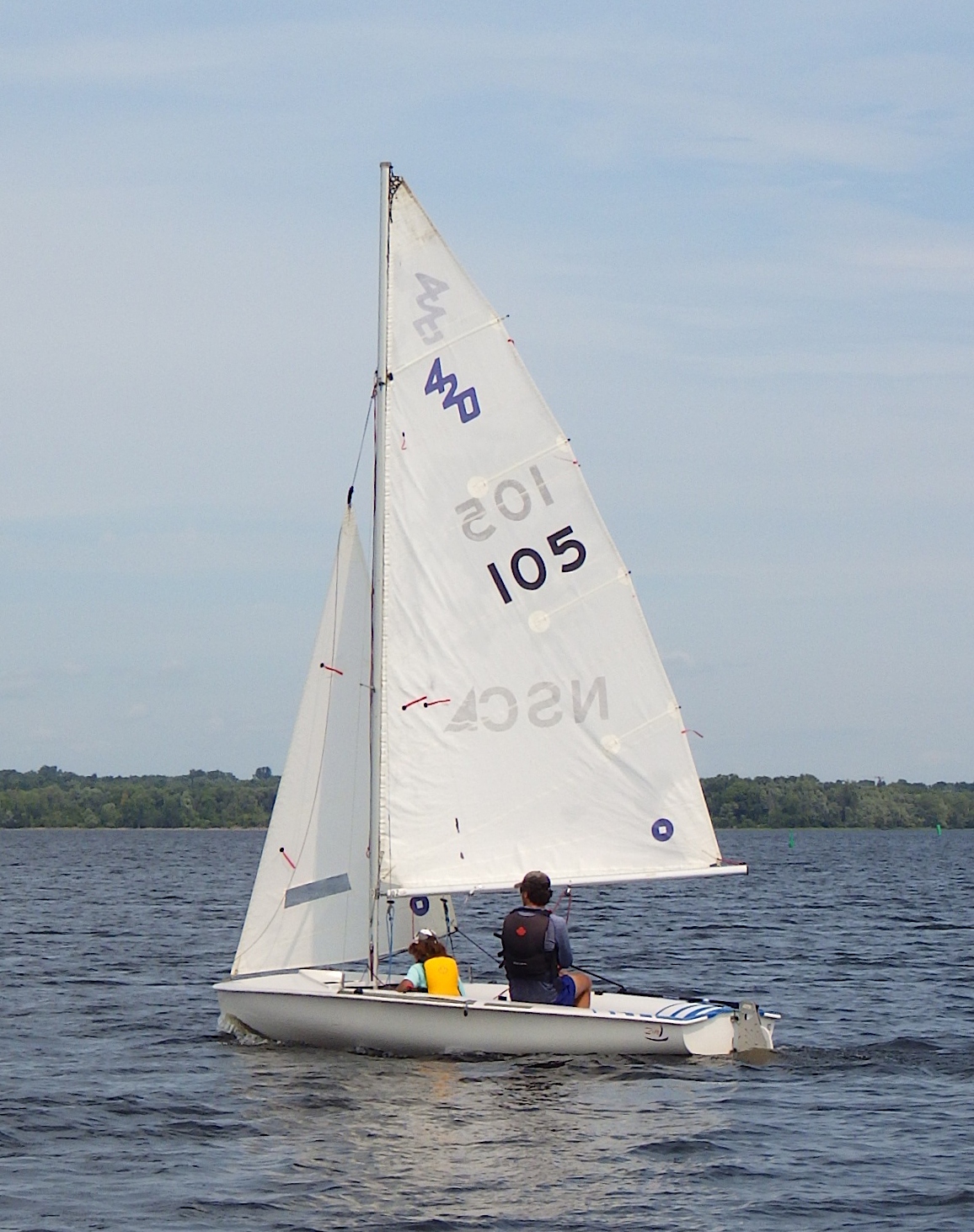
An 80 kg hull figure is not the total sailing mass with spars, sails, foils and crew. Weight labels must stay attached to their measurement conditions. Equally, a class outline is not a tuning guide: mast rake, rig tension and sail settings depend on the legal equipment and sailmaker guidance. The linked official documents and class resources are the starting point for those details; the photograph illustrates an actual boat, rather than certifying its configuration.
Sources & further reading
Technical details are based on the sources below. Our explanations are original editorial analysis, not a hands-on sea trial.
- World Sailing — International 420 technical sheet sailing.org
- British International 420 Class — class introduction 420sailing.org.uk
- International 420 Class Association — official class website 420sailing.org
Photography
Sources checked: . Specifications may vary by year, rig and configuration; follow the definitions used by each source.