Technical specifications
| Length overall — J/Boats sample sheet | 8.00 m |
|---|---|
| Beam — same sheet | 2.51 m |
| Standard draft — same sheet | 1.49 m |
| Displacement — same sheet | 1,315 kg |
| Standard ballast — same sheet | 635 kg |
| 100% sail area — same sheet | 31.40 m² |
A sportboat with fixed ballast
The J/80 combines a fixed keel, a transom-hung rudder and a fractional rig with a non-overlapping headsail. The retractable bowsprit carries an asymmetric spinnaker. Unlike a dinghy, part of its righting moment comes from ballast below the hull, although crew position remains important. The long open cockpit gives the working crew space to move through tacks and spinnaker manoeuvres.
J/Boats describes the hull and deck as glass-reinforced sandwich construction with balsa core, with additional reinforcement at highly loaded locations. That construction description concerns the sample specification rather than proof of the condition or exact build of any photographed boat.
Understanding the asymmetric sail
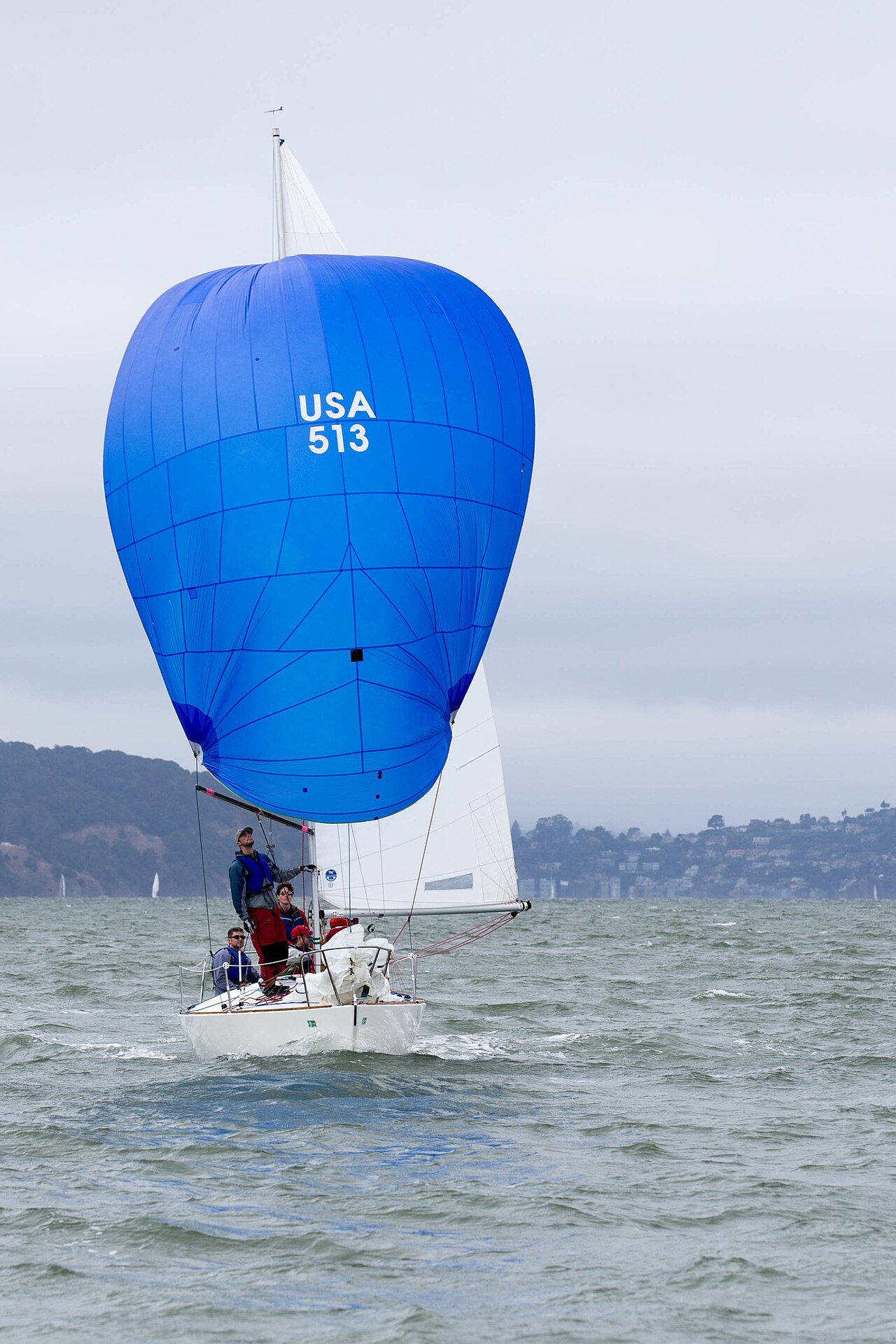
The spinnaker tack is projected forward on the bowsprit. This differs from a conventional symmetrical spinnaker flown from a pole whose angle can be changed across the foredeck. Downwind course selection therefore involves the relationship between apparent wind, sail pressure and distance sailed. A faster reaching angle may increase boat speed while adding distance; the useful comparison is progress towards the downwind mark, not speed through the water alone.
The jib furler and sprit controls bring distinct tasks into the cockpit. Their presence reduces some foredeck work but does not remove the need for a clear hoist, gybe and recovery sequence.
Treat the specification as a configuration
The figures above intentionally follow one J/Boats sample sheet. A later Australian J/Boats distributor sheet lists different beam, displacement and sail-area figures. Combining the lighter displacement from one with the sail area from another would create a boat that neither document actually specifies. This is especially important when calculating ratios or comparing sailing loads.
The 100% sail-area label is retained exactly as a measurement category; it is not the spinnaker area. For class racing, the current class rules and measurement certificate take precedence over a general brochure.
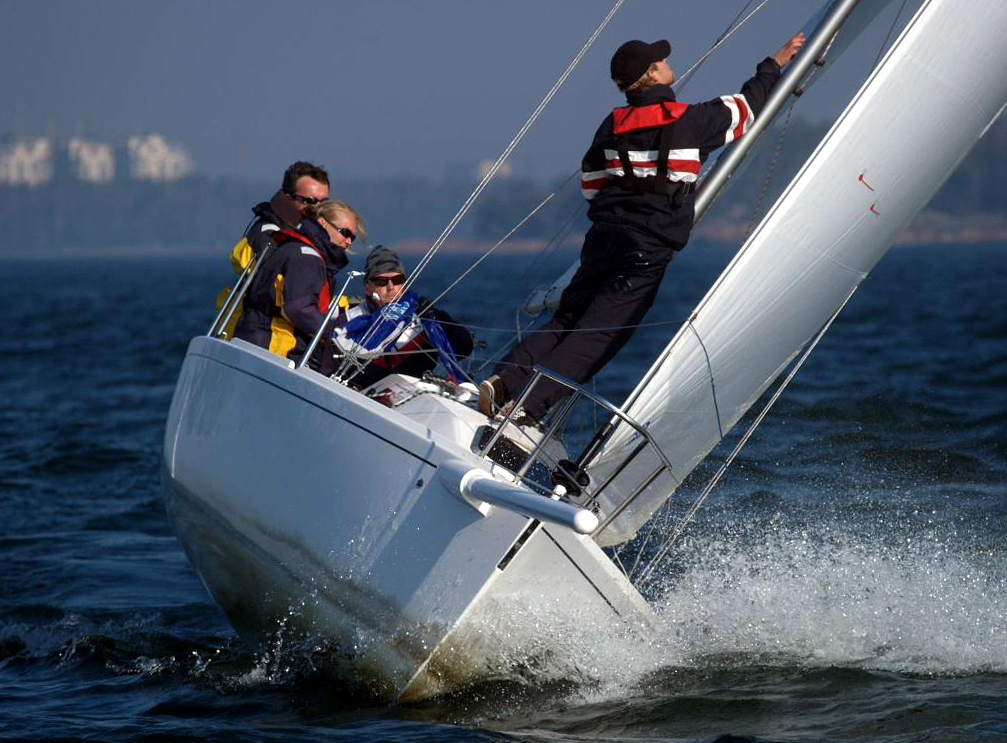
Reading the deck photograph
The close photograph makes the crew’s windward position and the working cockpit visible. Look for how body weight is kept outboard and how the helmsman’s space relates to the sheet-handling positions. Those relationships are more informative than assuming a promotional speed claim will occur in everyday sailing. The linked manufacturer page provides an official gallery and layout drawings for a wider view of the deck and interior; those images retain their owners’ copyright and are linked rather than copied here.
Sources & further reading
Technical details are based on the sources below. Our explanations are original editorial analysis, not a hands-on sea trial.
- J/Boats — J/80 sample technical specification jboats.com
- J/Boats — J/80 design overview and official gallery jboats.com
- J/80 Class — current rules and building specifications j80.org
- J/Boats Australia — 2020–2021 technical specification jboats.com.au
Photography
Sources checked: . Specifications may vary by year, rig and configuration; follow the definitions used by each source.