Technical specifications
| Length — class product overview | 7.31 m |
|---|---|
| Beam — class product overview | 2.489 m |
| Draft with keel down | 1.52 m |
| Listed boat weight — not loaded displacement | 809 kg |
| Typical crew — class overview | 4–5 |
Lightweight structure and crew leverage
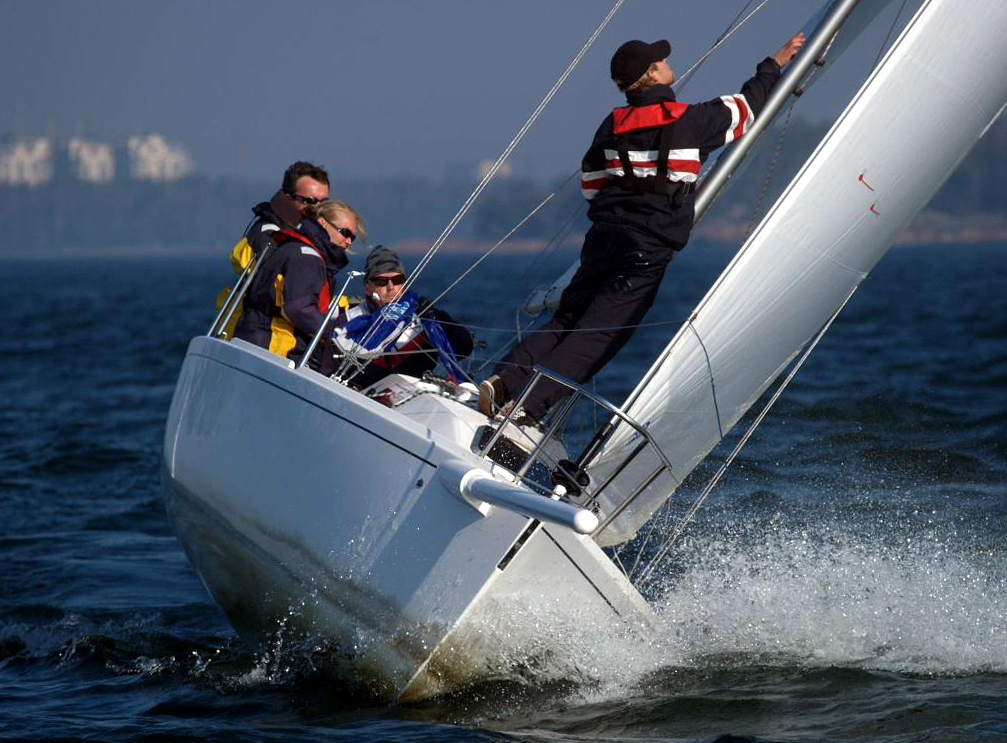
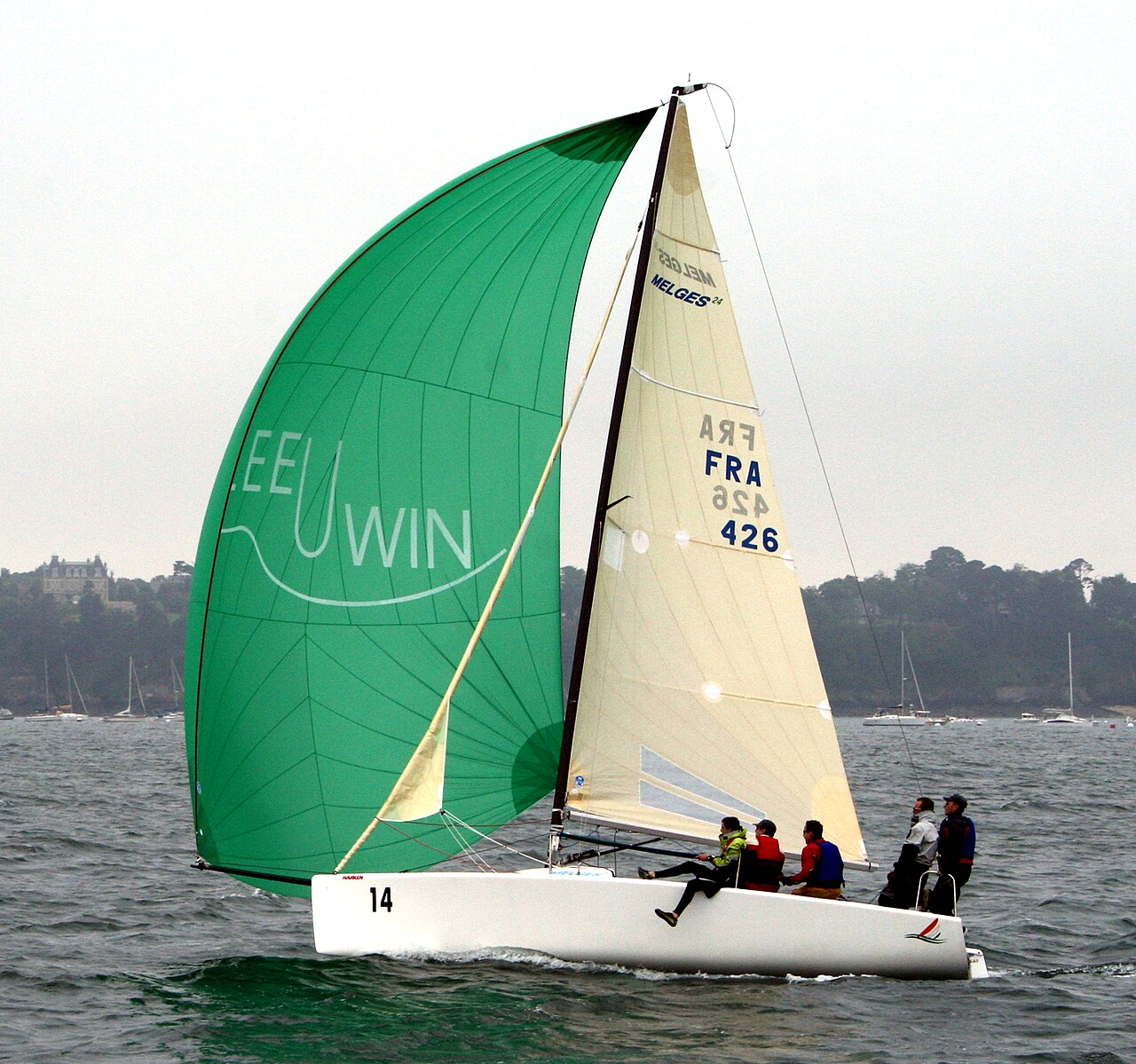
The Melges 24 is a one-design racing keelboat developed around a light platform, a fractional rig and an asymmetric spinnaker. The class overview identifies carbon components including the spar, rudder, bowsprit and keel fin. These choices describe a different balance of weight and sail-carrying power from a cruising yacht of the same length. The crew is an active part of that balance rather than simply a passenger load.
Its typical crew is four or five according to the class introduction. That is a practical description of normal operation, not a substitute for current event eligibility requirements or the rules governing crew changes.
Apparent wind shapes the downwind leg
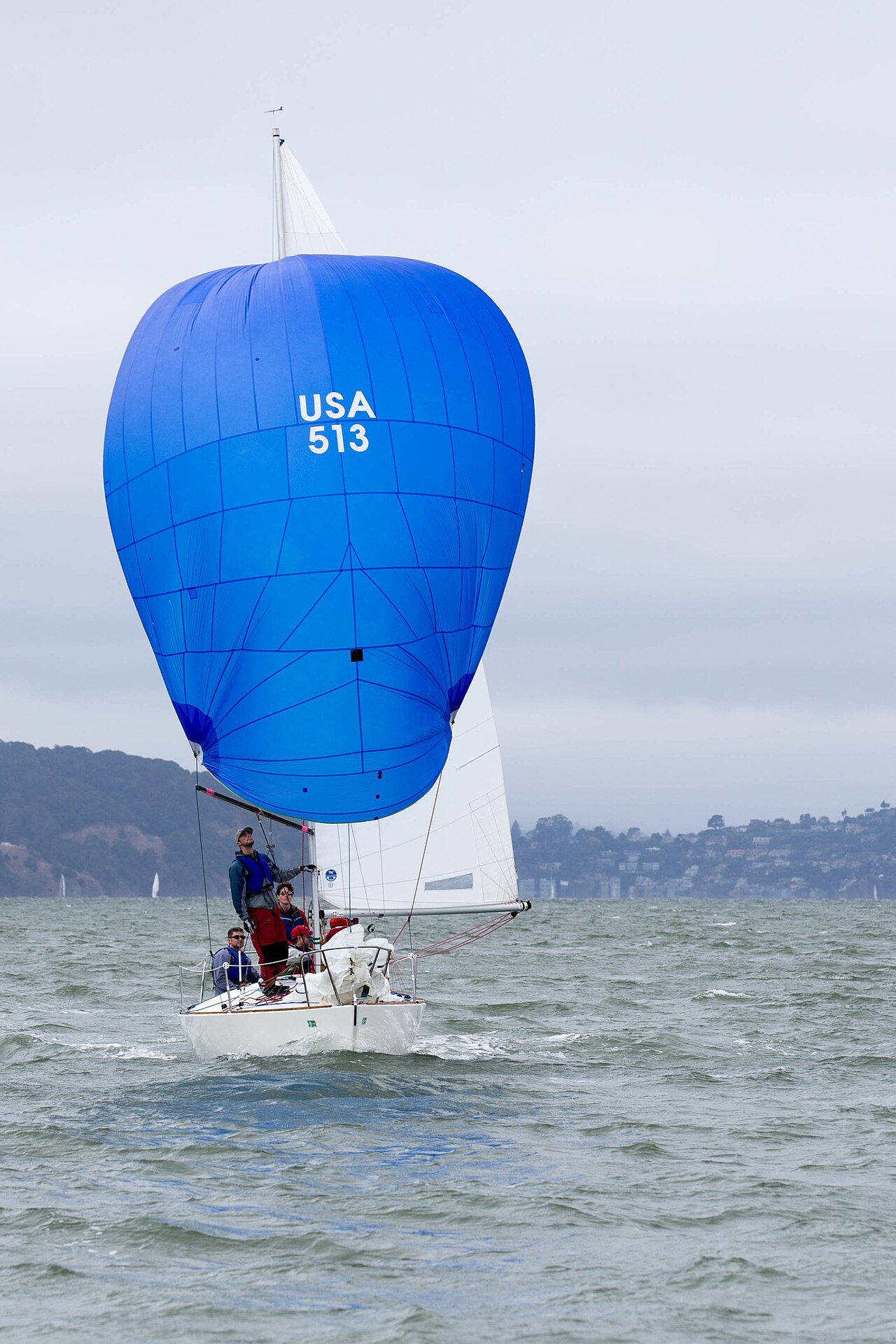
The asymmetric spinnaker is carried forward of the bow. As boat speed changes, the direction and strength of apparent wind change too, so the helm and trimmer must respond as one system. The shortest compass route to the leeward mark does not necessarily maximise progress. A tactical decision has to consider speed, sailing angle, gybe cost and the next patch of pressure together.
This is why a photograph of a fully drawing spinnaker is useful but incomplete. It shows sail shape at one instant, while a good manoeuvre is a sequence of coordinated changes in sheet load, heading and crew position.
A lifting keel needs a labelled draft
The quoted 1.52 m draft describes the keel-down configuration. Raising a lifting keel for transport or launching changes the geometry; it does not make the sailing configuration equivalent to a shallow-draft cruiser. The class measurement form separately checks keel-fin and bulb weights, rudder geometry and bowsprit extension. This shows how one-design control reaches beyond a headline hull length.
The listed 809 kg product weight is not a ready-to-race displacement with people, provisions and loose equipment added. Keeping the measurement category visible prevents exaggerated comparisons with heavier boats.
Sources, units and comparisons
The class product page prints both imperial and metric sail figures, with some pairs that are not straightforward unit equivalents. This profile does not silently reconcile them into a new sail specification. Rig dimensions and legal sails should instead be checked against the current class documents and the relevant sail measurement. The official class gallery linked below provides more racing views. The local photograph is independently licensed and does not imply endorsement by the builder or class.
Sources & further reading
Technical details are based on the sources below. Our explanations are original editorial analysis, not a hands-on sea trial.
- International Melges 24 Class — product overview and official gallery melges24.com
- International Melges 24 Class — 2026 measurement form melges24.com
- International Melges 24 Class — equipment inspectors handbook melges24.com
Photography
Sources checked: . Specifications may vary by year, rig and configuration; follow the definitions used by each source.