Technical specifications
| Length overall | 7.32 m |
|---|---|
| Waterline length | 6.10 m |
| Beam | 2.71 m |
| Standard draft | 1.22 m |
| Builder displacement figure | 1,406 kg |
| Standard ballast | 431 kg |
The deck-to-cabin compromise
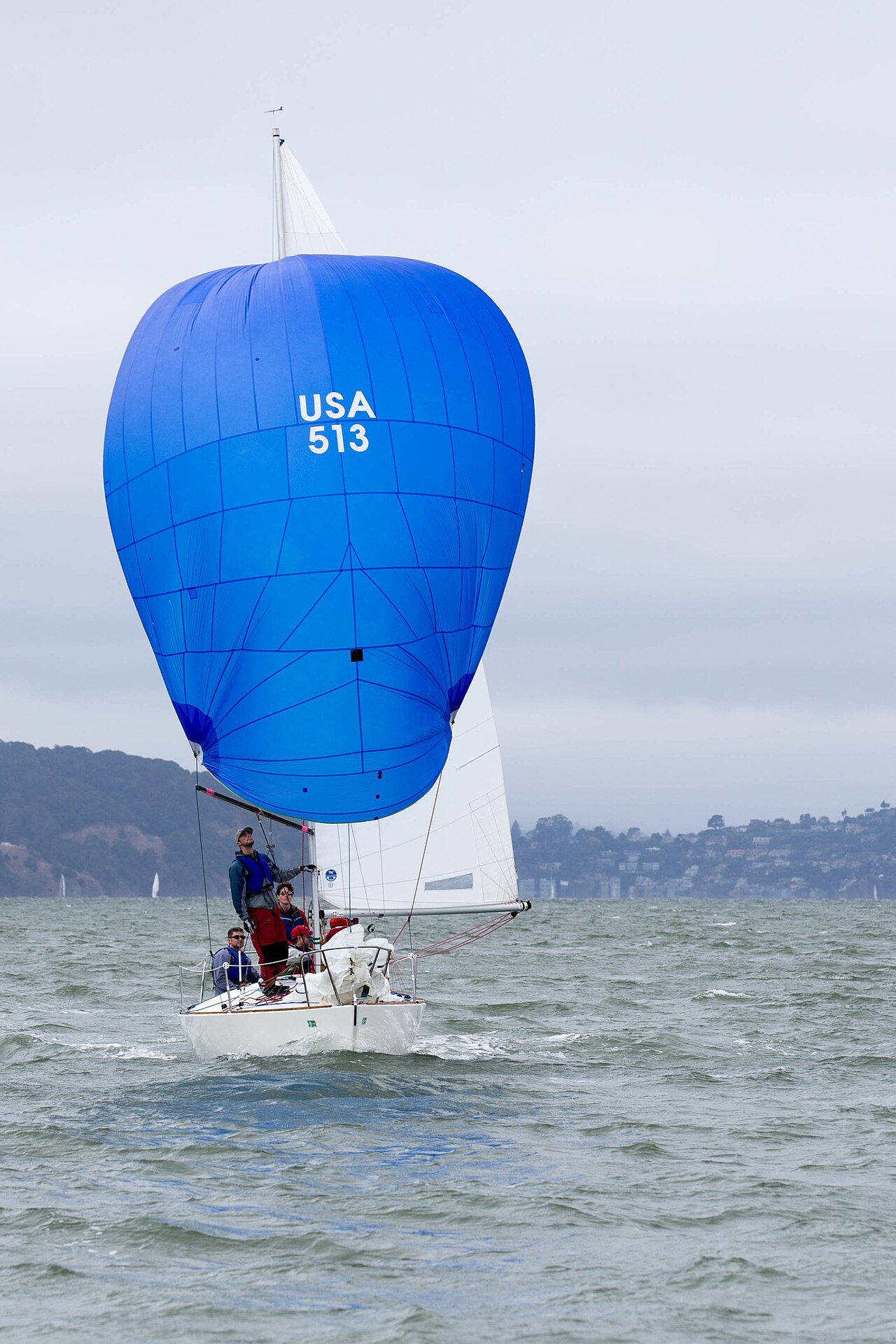
The J/24 places a fixed fin keel and a transom-hung rudder beneath a small cabin boat. J/Boats lists a 7.32 m overall length, while the static waterline figure is shorter. The cabin, coachroof and sidedecks give it a very different working layout from an entirely open sportboat. It is useful to look at the relationship between the foredeck, sheet winches and cockpit rather than classifying the boat by length alone.
The builder’s sample sheet describes glass-reinforced balsa-core hull and deck construction, an aluminium rig and a lead-antimony fin keel. Those are design descriptions; an individual boat’s age, repairs and measurement record remain separate questions.
Why the symmetrical spinnaker matters
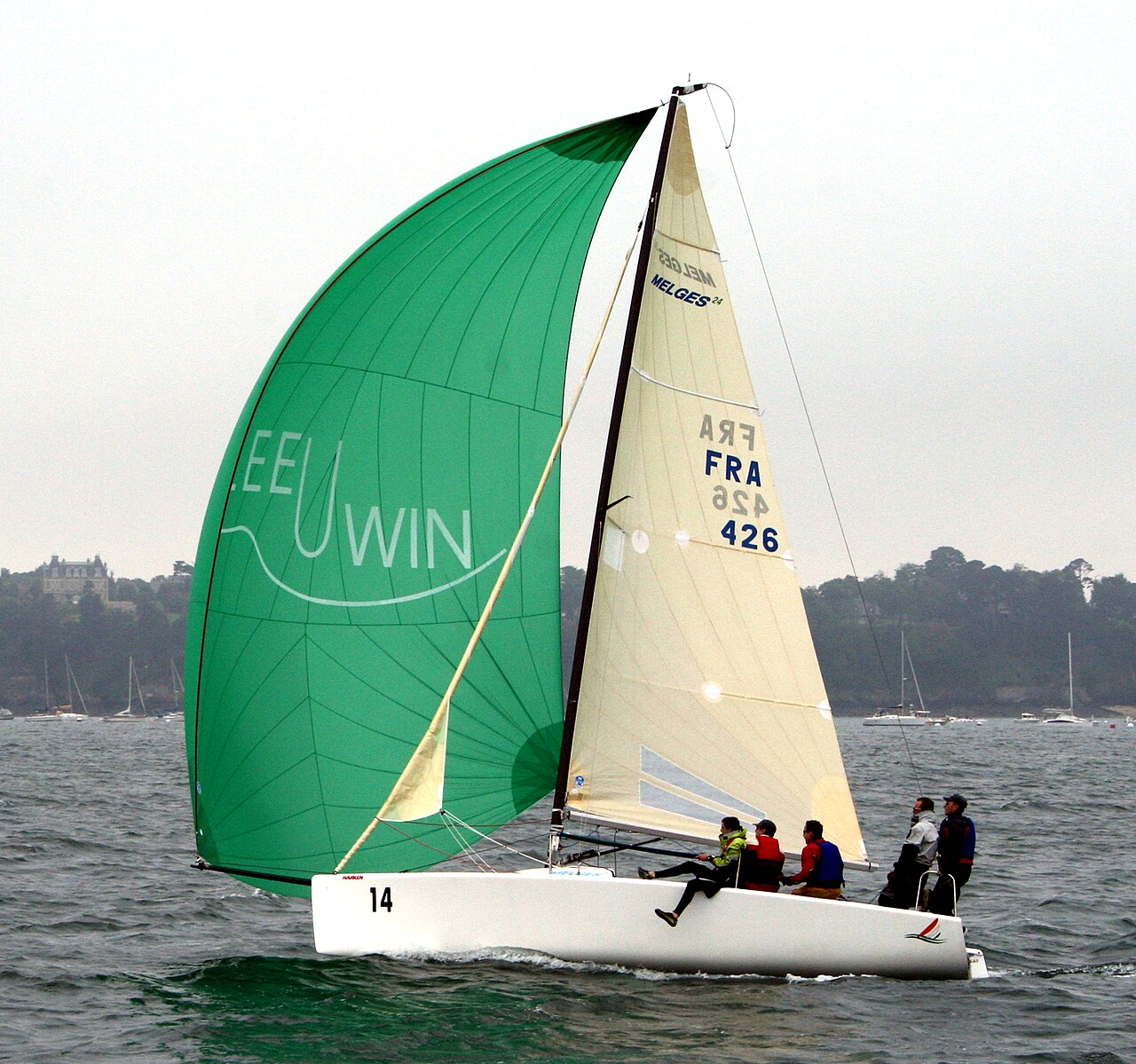
The symmetrical spinnaker is set with a separate pole, allowing its windward corner to be positioned as the course and apparent wind change. Gybing involves more than turning the helm: the pole, sheets and guys must be managed while the boat stays balanced. Upwind, headsail selection and trim connect to the mainsail and the helmsman’s ability to hold a repeatable groove.
This creates a useful example of team sailing. Bow work, pit tasks, trimming and steering are interdependent. A technically clean manoeuvre preserves momentum and keeps each sailor’s next task predictable.
Displacement is not racing measurement weight
The builder gives a displacement of 1,406 kg. The Australian class introduction separately publishes a racing-weight figure, illustrating why those labels should not be treated as synonyms. Class rules define what must be aboard and the condition in which a measurement is made. A brochure number alone cannot establish that a particular boat is legal for a championship.
The same caution applies to sail area. The builder’s 100% sail-area figure describes a defined calculation, not the area of every allowed headsail plus the spinnaker. A performance comparison must use consistent definitions for both boats.
What to study in the official material
The manufacturer’s deck drawings show how a comparatively small boat accommodates winches, tracks, a cabin entrance and a foredeck hatch. The class documents explain the limits within which owners maintain that common platform. Together they provide a stronger technical picture than a ranking based only on sail-area-to-displacement ratios. This is a document-based profile, without a claim to first-hand handling experience or a single speed that every J/24 will reach.
Sources & further reading
Technical details are based on the sources below. Our explanations are original editorial analysis, not a hands-on sea trial.
- J/Boats — J/24 technical specification and drawings jboats.com
- J/24 Australia — class introduction and measurement labels j24.com.au
- International J/24 Class — 2023 rules j24class.org
Photography
Sources checked: . Specifications may vary by year, rig and configuration; follow the definitions used by each source.