These categories overlap: hull count, rig, purpose and construction describe different aspects of a boat. One yacht can belong to several groups.
One main hull, two floats
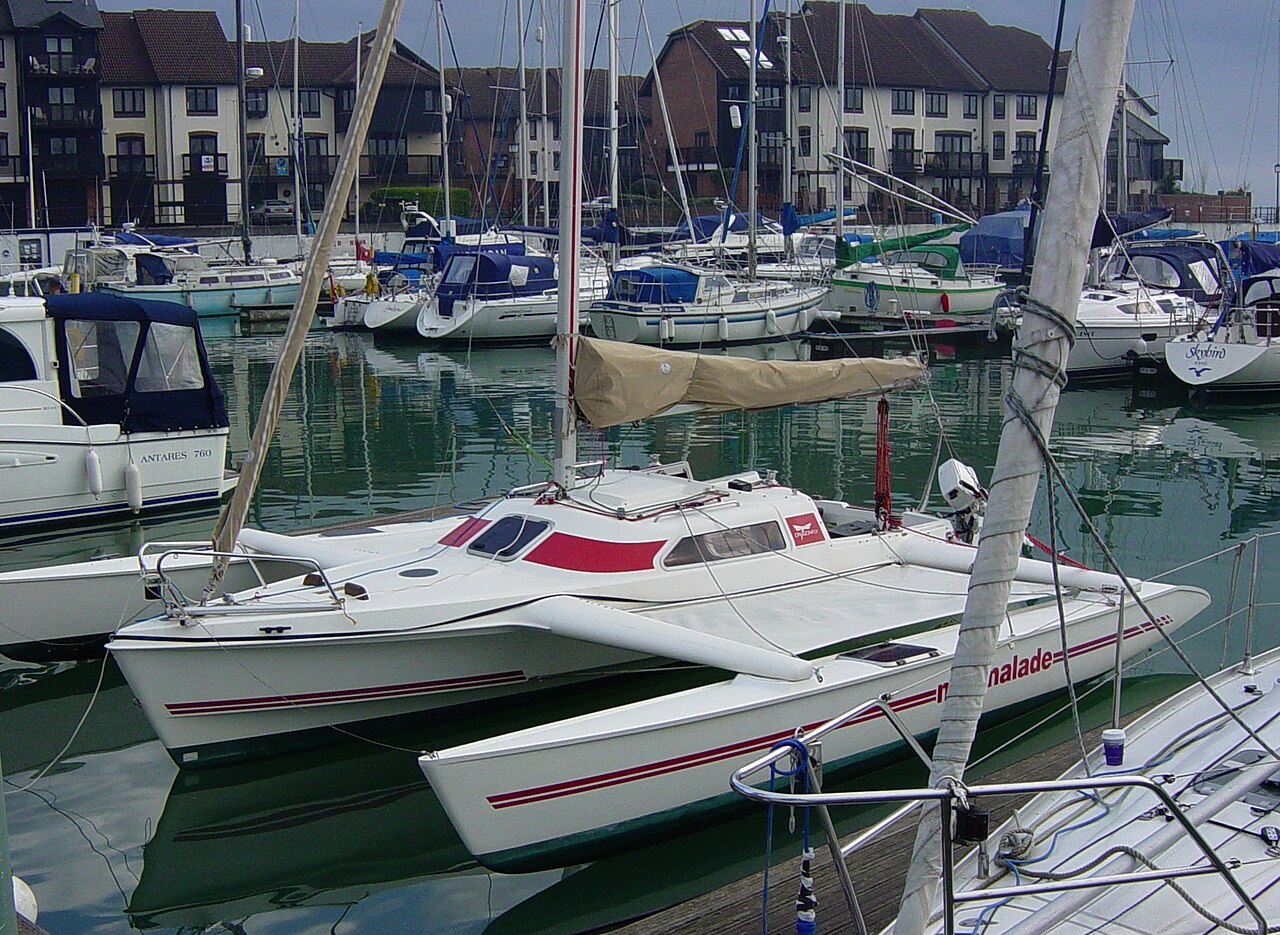
A trimaran combines a central hull with two side floats connected by crossbeams. Accommodation, when fitted, is often concentrated in the main hull. The floats create a wide platform and contribute buoyancy as the boat heels. The relationship between beam, float volume and weight is part of the design; counting hulls alone cannot predict speed or comfort.
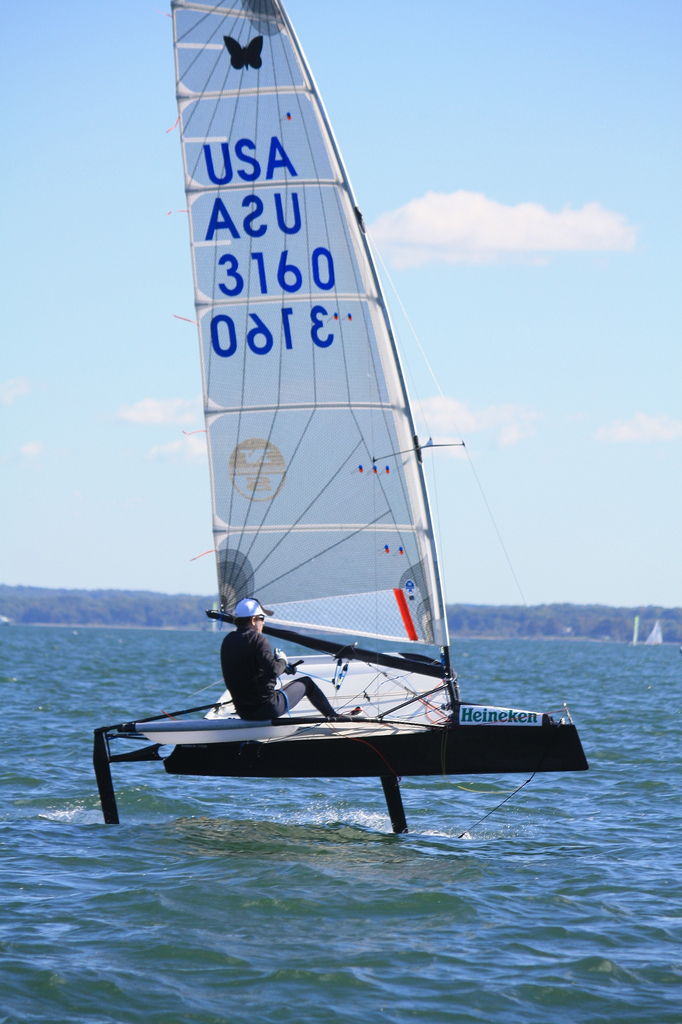
Trimarans range from open dayboats to folding cruisers and very large offshore racers. Some foil, some do not. A cruising trimaran can therefore belong to several of this library’s descriptive groups at once.
Folding changes the logistics
Some designs fold the floats towards the central hull to reduce harbour or transport width. Corsair’s 880 is a documented example: the manufacturer publishes both sailing and folded beam, along with board-up and board-down draft. These paired measurements explain more than a single width or draft value.
Folding is an engineered mechanism, not permission to improvise the sailing configuration. The beams, attachment points, rig support and float clearances work together. Transport also requires the complete road package to be considered; a manufacturer’s unladen boat weight does not include every trailer and cruising item.
The performance trade-offs
A narrow central hull can have modest living width even when the overall boat is broad. Weight placed at the ends changes trim; additional cruising stores may alter performance appreciably. Compare usable cabin space, payload guidance, foil or board arrangements and assembly work alongside sail area. As with other multihulls, a wide platform provides strong initial stability but a different recovery situation from a ballasted monohull. Specific design information is more useful than a universal multihull claim.
Sources & further reading
Technical details are based on the sources below. Our explanations are original editorial analysis, not a hands-on sea trial.
- Corsair Marine — Corsair 880 official design and specifications corsairmarine.com
- Corsair Marine — Folding system corsairmarine.com
- RYA — Types of accessible sailing boats, including multihulls authoring.rya.org.uk
Photography
Sources checked: . Specifications may vary by year, rig and configuration; follow the definitions used by each source.