Technical specifications
| Maximum hull length — class rule overview | 18.28 m |
|---|---|
| Maximum length overall | 20.12 m |
| Maximum hull beam | 5.85 m |
| Maximum draft | 4.50 m |
| Maximum air draft | 29 m |
A box of rules, many different boats
IMOCA describes an offshore racing class, not one production model. The familiar “60” refers to the maximum hull length of 18.28 m. The official overview separately gives a larger maximum overall length, so the two labels should not be interchanged. Within the rules, designers develop hull shapes, cockpit arrangements and foil concepts for demanding ocean racing.
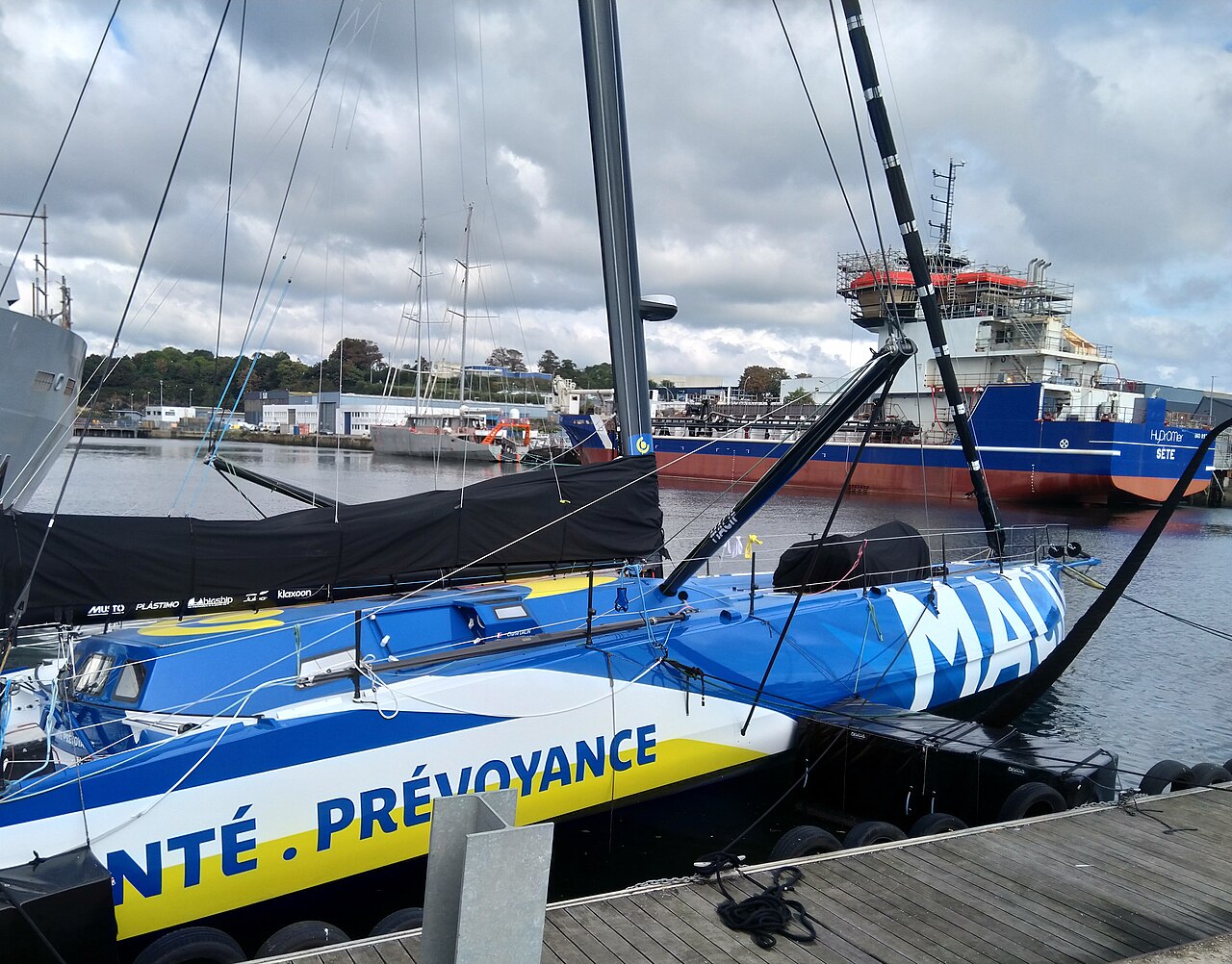
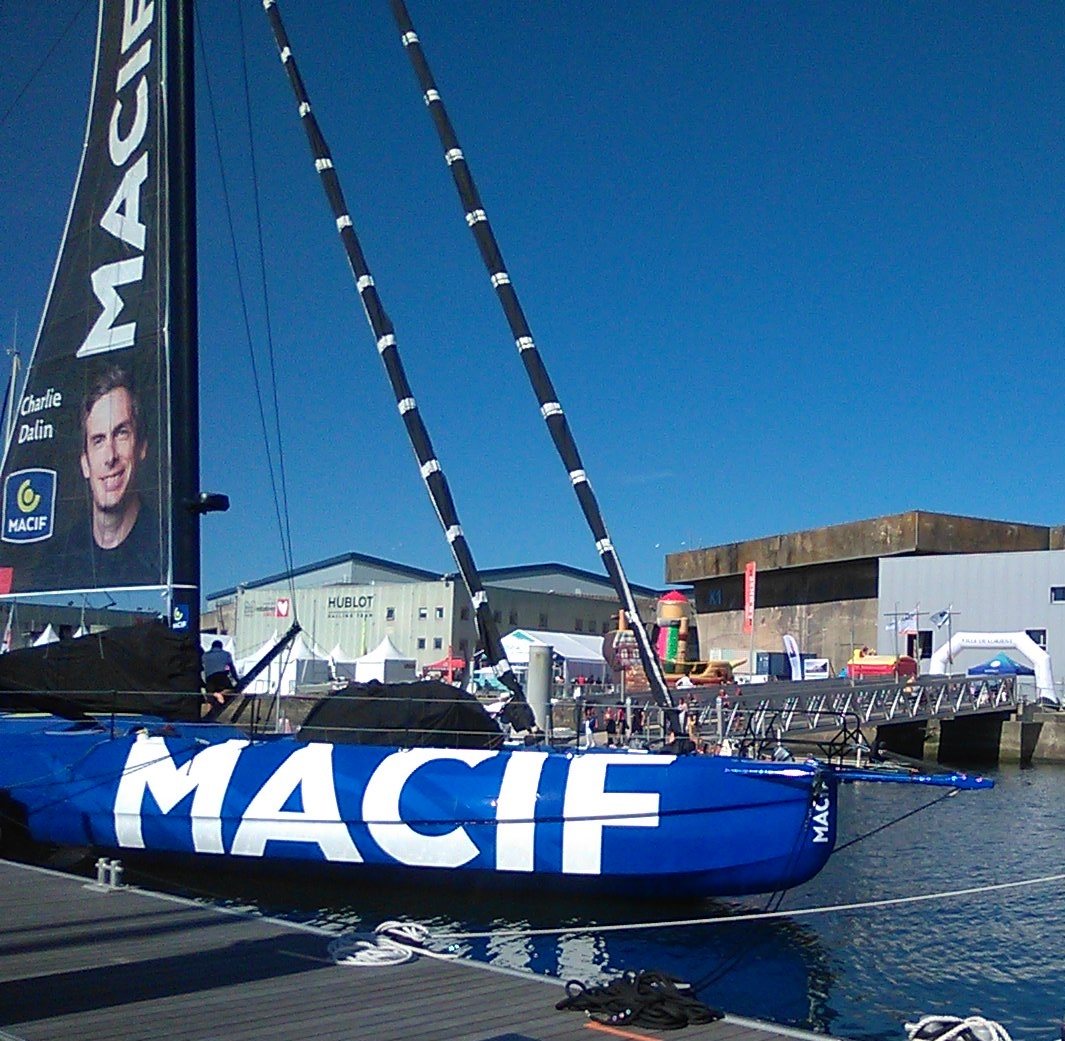
A newer foiling prototype and an older non-foiling boat may both belong to the class while having very different structures and sailing characteristics. The numbers above are class limits; they are not a complete technical sheet for the MACIF Santé Prévoyance boat shown in the photograph.
How ballast and foils share the work
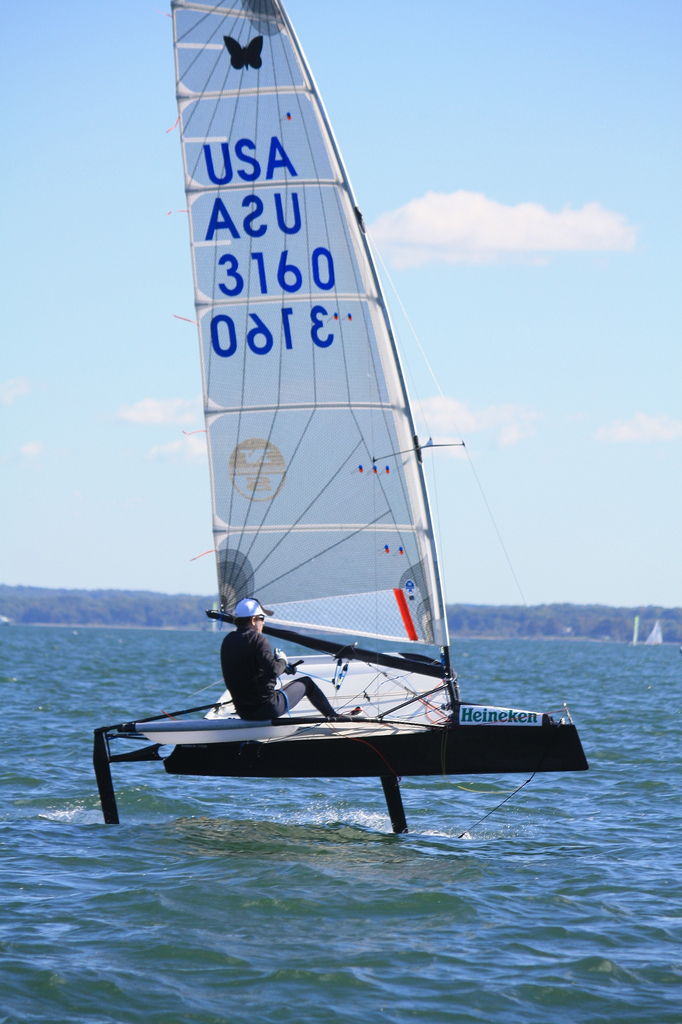
A canting keel moves ballast sideways to increase the righting lever. Foils can generate lift and contribute to the boat’s dynamic behaviour as speed rises. Water ballast is another element in the weight-and-balance system. These systems interact with hull form and sail force; it is inaccurate to describe every modern IMOCA as simply “a dinghy made larger”.
Nor does a foil automatically make every condition faster. The useful engineering questions include lift at different speeds, drag when the foil is not carrying much load, structural loads in waves and how much adjustment a sailor can manage over a long passage.
Offshore safety is part of the design
The class overview highlights self-righting capability, internal compartmentation and buoyancy requirements. These sit alongside performance rather than outside it. Reducing weight is valuable only within a structure and system that can withstand the intended environment. The official rules also standardise selected components, while leaving development scope elsewhere.
The result is a sailing platform in which reliability, protected working positions and access to controls affect sustained performance. A spectacular photograph captures a moment; an ocean race tests how the entire platform works repeatedly and how failures can be contained.
The photographed boat and its own record
The image shows MACIF Santé Prévoyance, identified by the class as a Guillaume Verdier design launched in June 2023. Its individual class profile is linked separately so that readers can distinguish the pictured example from the limits of the class. No universal IMOCA displacement or sail inventory is asserted here. Those values depend on the particular boat, its generation and its measured configuration; even a class database can contain entries that need clarification before numerical comparison.
Sources & further reading
Technical details are based on the sources below. Our explanations are original editorial analysis, not a hands-on sea trial.
- IMOCA — class rules and principal dimensional limits imoca.org
- IMOCA — MACIF Santé Prévoyance individual boat profile imoca.org
- IMOCA — official fleet database imoca.org
Photography
Sources checked: . Specifications may vary by year, rig and configuration; follow the definitions used by each source.