These categories overlap: hull count, rig, purpose and construction describe different aspects of a boat. One yacht can belong to several groups.
Two hulls and an open platform
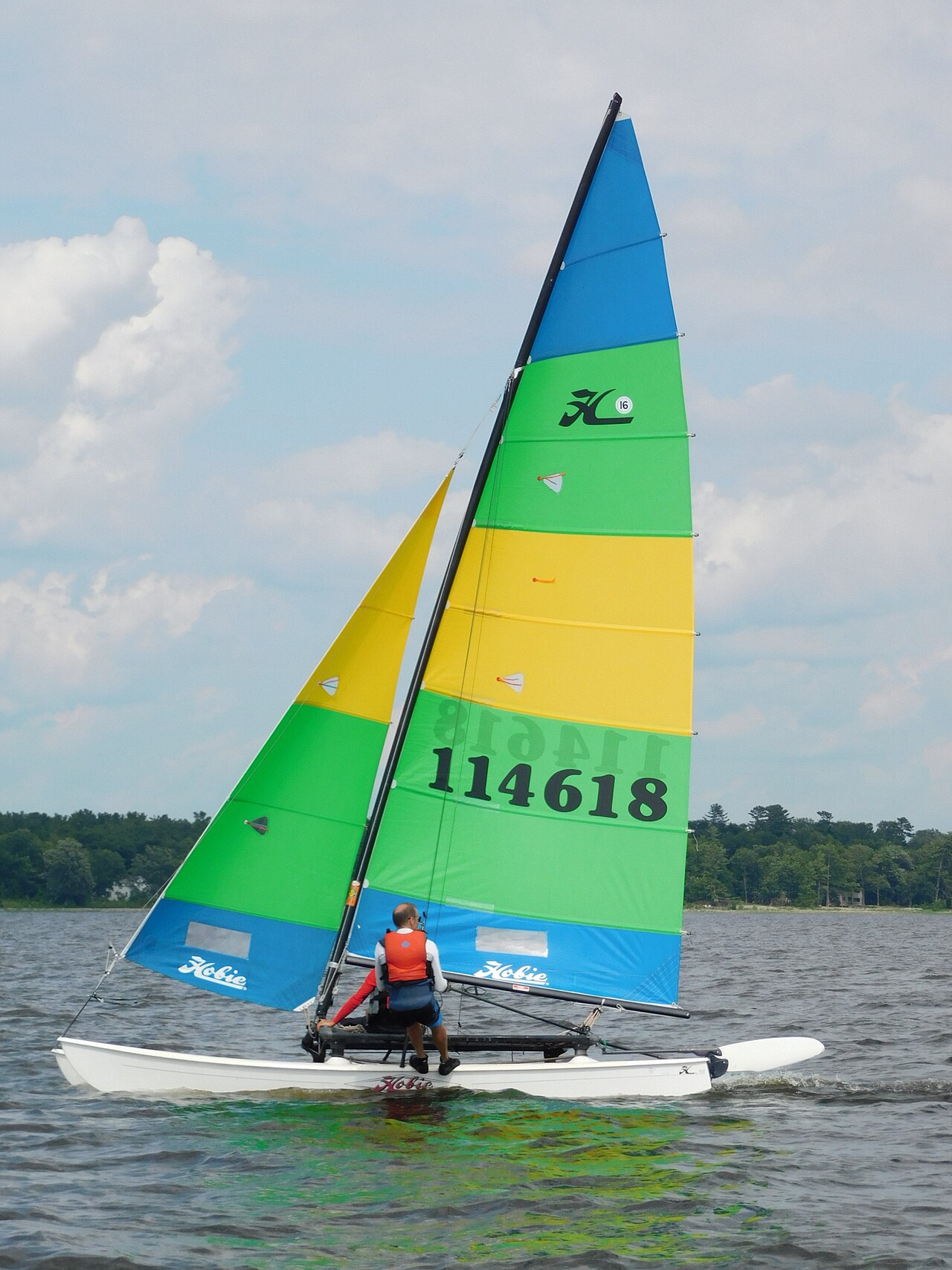
A beach catamaran typically joins two slender hulls with crossbeams and a trampoline. Accommodation is minimal: the open platform is for sailing rather than living aboard. The wide separation of the hulls provides substantial initial resistance to heeling, and the light construction gives a different response from a ballasted cruising monohull.
The term is broad. Some models are uncomplicated recreational boats; others are demanding racing machines with spinnakers, trapezes or foils. The ability to launch from a beach does not make every shoreline suitable or make all beach cats equally easy to handle.
Boards are not universal
The Hobie 16 is a useful example because its asymmetric hull form works without daggerboards. Other beach catamarans use boards to generate lateral resistance. Boardless and board-equipped designs therefore should not be treated as interchangeable: draft, launching, pointing performance and appendage handling all depend on the complete design.
Twin rudders are linked to steer the platform together. Mast rotation, mainsheet and traveller arrangements can also look different from a conventional yacht. The manufacturer’s rigging manual explains what the particular boat actually carries; a general photograph may hide those connections.
What the wide beam does and does not mean
Initial stability is not an unlimited reserve. Crew position, sail force and the amount of buoyancy forward matter, including the possibility of pitching over the bows. Compare the intended crew, capsize-recovery arrangements, launch trolley, rigging procedure and sailing area. A beach catamaran can be an engaging way to explore multihull sailing, but a technical comparison needs model-specific limits and support, not a blanket claim that two hulls cannot capsize.
Explore real examples
- Hobie 16 — A beach catamaran with two asymmetric hulls, a trampoline platform and double trapeze, designed around sailing without daggerboards.
Sources & further reading
Technical details are based on the sources below. Our explanations are original editorial analysis, not a hands-on sea trial.
- Hobie Cat Europe — Hobie 16 owner manual (manufacturer document hosted by dealer) westcoastsailing.net
- Japan Hobie Class Association — Hobie 16 specification jsaf.or.jp
- RYA — Dinghy, keelboat and multihull sailing pathway rya.org.uk
Photography
Sources checked: . Specifications may vary by year, rig and configuration; follow the definitions used by each source.